

Have you ever dreamed of stepping foot on the Red Planet? 🚀 The idea of humans living on Mars has long captivated our imagination, from science fiction novels to blockbuster movies. But how close are we to turning this fascinating concept into reality?
As we stand on the brink of a new era in space exploration, the prospect of Mars colonization is no longer just a wild fantasy. Scientists and engineers work tirelessly to overcome the immense challenges of sustaining human life on a hostile planet. From developing advanced life support systems to creating sustainable food sources, the road to Mars is paved with innovation and determination. But the question remains: Are we ready to take that giant leap?
This blog post will explore the hurdles we face in making Mars our second home, the proposed ingenious solutions, and the potential timeline for this monumental endeavor. We’ll also delve into the exciting benefits that Mars colonization could bring to humanity. So, buckle up and prepare for a journey through the cosmos as we uncover just how close we are to living on Mars!
Read also: Touchdown! Blue Ghost Lunar Lander Lands on the Moon
Challenges of Living on Mars
A. Hostile environment and extreme temperatures
Mars presents a challenging environment for human habitation, with temperatures ranging from -140°C to 20°C. The planet’s thin atmosphere fails to retain heat, leading to extreme temperature fluctuations.
| Aspect | Earth | Mars |
|---|---|---|
| Average Temperature | 15°C | -63°C |
| Atmospheric Pressure | 1 atm | 0.006 atm |
B. Lack of breathable atmosphere
- CO2-rich atmosphere (95%)
- Negligible oxygen content
- Need for artificial life support systems
Proposed Solutions for Mars Habitation
Advanced life support systems
- Oxygen generation
- Water recycling
- Waste management
| System Component | Function |
|---|---|
| Oxygen Generator | Produces breathable air |
| Water Recycler | Purifies and reuses water |
| Waste Processor | Converts waste to resources |
Radiation shielding technologies
Innovative materials and designs protect Mars inhabitants from harmful cosmic radiation. These include regolith-based shields and electromagnetic fields. In-situ resource utilization is crucial, as is using Martian soil to create protective barriers around habitats.
Timeline for Mars Colonization
Near-term goals (next 10 years)
- Robotic missions for resource mapping
- Advanced life support systems testing
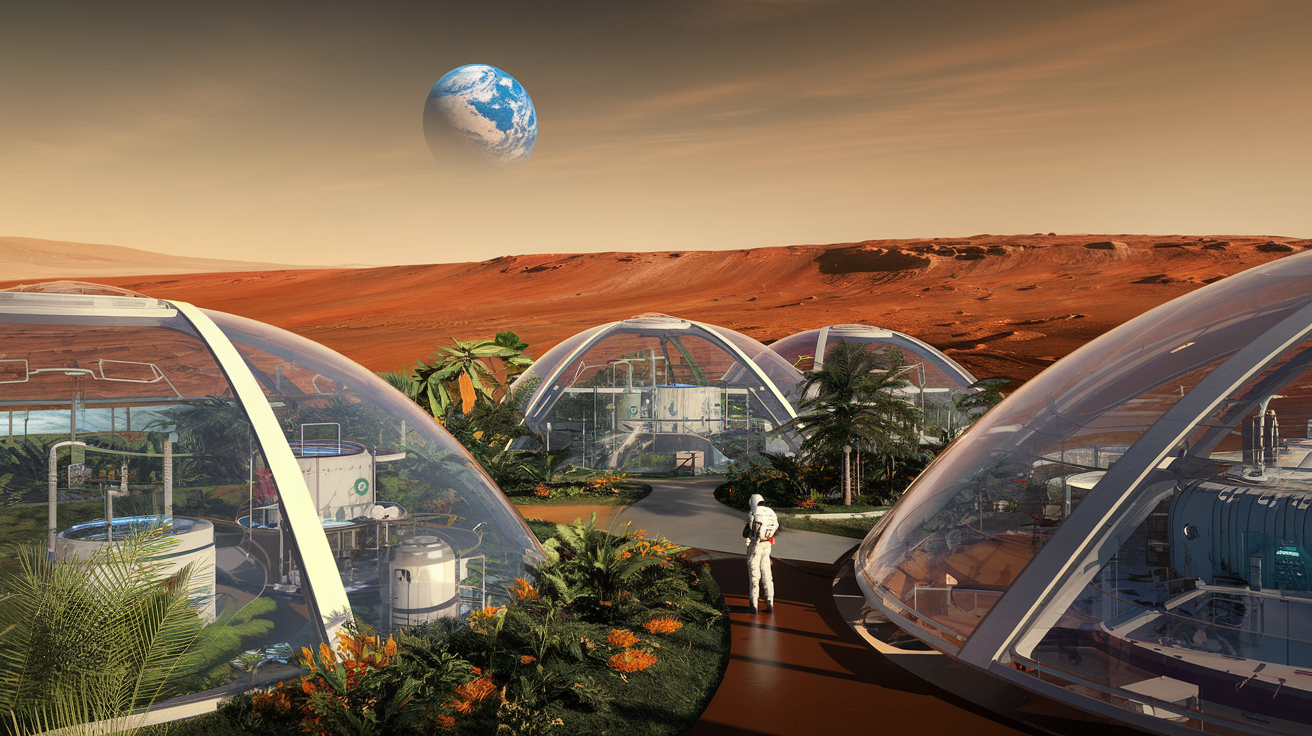
- Prototype habitat construction
| Goal | Description |
|---|---|
| Resource mapping | Identify water sources and potential landing sites |
| Life support | Develop closed-loop systems for air and water recycling |
| Habitat prototypes | Test inflatable and 3D-printed structures |
Mid-term objectives (10-30 years)
In the next decade, we’ll see the first crewed missions to Mars, establishing temporary bases. These missions will focus on expanding habitats, conducting in-situ resource utilization experiments, and testing long-term survival strategies. By 2050, we may witness the first permanent human settlement on Mars, marking a significant milestone in our journey to colonize the Red Planet.
Potential Benefits of Mars Colonization
Scientific breakthroughs
- Martian geology research
- Exobiology studies
- Advanced space medicine
Read also: Mysteries of the Deep: Recent Discoveries from Ocean Expeditions
Technological innovations
| Innovation | Application on Earth |
|---|---|
| Water recycling | Drought-prone areas |
| Radiation shielding | Nuclear power plants |
| Closed-loop ecosystems | Sustainable agriculture |
Mars colonization promises groundbreaking scientific discoveries and technological advancements. Studying Martian geology and potential microbial life could revolutionize our understanding of planetary formation and the origins of life. Meanwhile, life-support system innovations, like efficient water recycling and radiation shielding, could find crucial applications back on Earth.
The journey to establish human life on Mars is fraught with challenges, from the harsh environment to the complex logistics of interplanetary travel. Yet, as we’ve explored, scientists and engineers are developing innovative solutions to overcome these obstacles. The building blocks for Mars habitation are steadily taking shape, from advanced life support systems to radiation shielding technologies.
While the timeline for Mars colonization remains uncertain, the potential benefits are compelling. Establishing a human presence on the Red Planet could revolutionize our understanding of the universe, drive technological advancements, and potentially secure humanity’s long-term survival. As we continue to push the boundaries of space exploration, the dream of living on Mars inches closer to reality, inspiring us to reach for the stars and redefine what’s possible for our species.
Read also: Don’t Miss the Total Lunar Eclipse 2025: Nature’s Epic Light Show
