

Introduction
Picture this: a colossal ocean current, stronger than anything else on Earth, silently slows to a crawl, sending shockwaves through the planet’s climate system. This isn’t science fiction—it’s happening right now, and the culprit is melting Antarctic ice. The Antarctic Circumpolar Current (ACC), the powerhouse that drives global ocean circulation, is losing its strength as fresh water from melting ice pours into the Southern Ocean. The result? A chain reaction that could transform weather patterns, disrupt marine life, and threaten coastal communities worldwide. Welcome to the Great Ocean Slowdown—a phenomenon that’s as urgent as it is fascinating.
What Is the Antarctic Circumpolar Current?
The Antarctic Circumpolar Current (ACC) is the planet’s most powerful ocean current, a relentless ring of water that flows clockwise around Antarctica. Connecting the Atlantic, Pacific, and Indian Oceans, it’s driven by fierce westerly winds and spans thousands of miles. This current isn’t just a marvel of nature—it’s a climate MVP. It shuttles heat, carbon dioxide, and nutrients across the globe, keeping temperatures in check and fueling marine ecosystems. Without the ACC, the Earth’s climate would be thrown into chaos.
The Threat: How Melting Antarctic Ice Disrupts the ACC
Here’s where the trouble begins. Rising global temperatures are causing melting Antarctic ice to release massive amounts of fresh water into the Southern Ocean. Unlike the salty seawater that powers the ACC, this freshwater is lighter and less dense. Instead of sinking and mixing with deeper currents, it floats on the surface, forming a barrier that blocks the usual flow of nutrient-rich waters from below. Imagine pouring a layer of oil over a churning pot of soup—it stops the ingredients from circulating properly.
Research shows this isn’t a slow burn. The ACC’s speed has already dipped in recent decades, and if greenhouse gas emissions continue unchecked, it could slow by 20% by 2050. That’s a dramatic shift in just a few decades, driven largely by melting Antarctic ice, and it’s already setting off alarm bells among scientists.
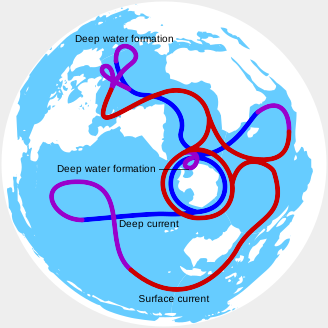
The Domino Effect: What Happens When the ACC Slows
A sluggish ACC doesn’t just affect Antarctica—it sends ripples across the planet. Here’s how:
1. Wilder Weather
The ACC acts like a gatekeeper, separating frigid Antarctic waters from warmer subtropical zones. When it slows, this boundary weakens, letting cold and warm waters mingle in unpredictable ways. The result? Weather patterns could go haywire. Think of fiercer storms in some areas, prolonged droughts in others, and even shifts in seasonal norms. Regions like Europe, which rely on ocean currents for mild climates, might face unexpected extremes.
2. Marine Life in Peril
The ACC is a lifeline for ocean ecosystems, delivering nutrients that sustain everything from tiny plankton to massive whales. A slowdown could choke this supply chain, throwing food webs into disarray. Species adapted to specific conditions might struggle to survive as their habitats shift or vanish. The ripple effects could reach fisheries and coastal economies, too.
3. Uneven Sea Level Rise
Ocean currents help spread water evenly across the globe. If the ACC falters, water could pile up in certain regions, causing sea levels to rise faster in some places than others. Low-lying areas, from Pacific islands to U.S. coastlines, could accelerate flooding and erosion, while others might dodge the worst—for now.
Why Is This Happening? The Human Connection
Let’s not kid ourselves: this isn’t just Mother Nature acting up. The rapid pace of melting of Antarctic ice is tied to human activity. Burning fossil fuels, clearing forests, and pumping out CO₂ have cranked up global temperatures, speeding up ice loss at an unprecedented rate. Natural climate cycles play a part, but the data is clear—our carbon footprint is the main driver. The ACC’s slowdown is a symptom of a bigger problem: climate change on overdrive.
The Clock Is Ticking: Projections and Urgency
Scientists aren’t just guessing about the future—they’ve got numbers to back it up. Climate models suggest that under high-emission scenarios, the ACC could lose 20% of its strength by 2050. That’s less than 30 years away, a blink in geological time but a lifetime for us. Satellite data already shows the current weakening, and the trend is set to worsen unless we act fast. The stakes couldn’t be higher.
Can We Stop the Slowdown?
The news isn’t all doom and gloom. While melting Antarctic ice poses a massive challenge, we’re not powerless. Here’s what can turn the tide:
- Cut Emissions: Switching to renewables, boosting energy efficiency, and ditching fossil fuels can slow ice melt and keep the ACC humming.
- Global Teamwork: Climate change is a worldwide issue. Agreements like the Paris Accord can unite nations to tackle it head-on.
- More Research: Scientists need funding and support to track the ACC and predict its impacts accurately.
- Spread the Word: Awareness drives action. The more people understand this crisis, the more pressure there is to fix it.
Every step counts. The ACC’s fate—and ours—hangs in the balance.
Conclusion
The Great Ocean Slowdown isn’t some far-off threat—it’s unfolding now, fueled by melting Antarctic ice and our own choices. This mighty current, once a steady heartbeat of the planet, is faltering, and the consequences could touch every corner of the globe. From wilder weather to struggling ecosystems, the signs are clear: we’re at a tipping point. But knowledge is power. By grasping what’s at stake and pushing for change, we can still steer this ship back on course. The ocean’s future—and ours—depends on it.
