
Introduction
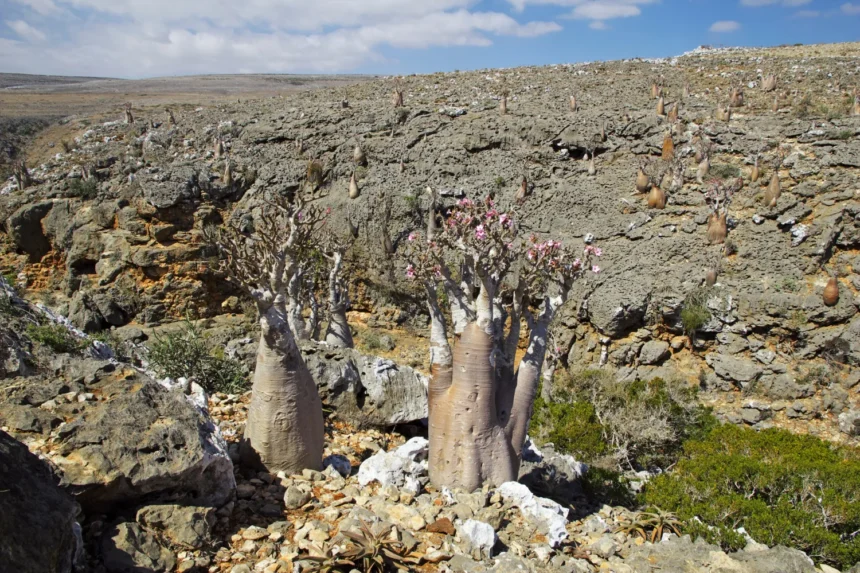
Islands are often referred to as natural laboratories of evolution, but few compare to Socotra, an island so biologically distinct that it’s often dubbed the Galapagos of the Indian Ocean. Nestled about 150 miles off the Horn of Africa and technically a part of Yemen, this remote archipelago remains one of Earth’s most isolated and least disturbed ecosystems. Socotra, pronounced “So-ko-tra,” has been largely cut off from the rest of the world for millions of years, allowing unique species to evolve that are found nowhere else.
Read Also: Discover Floating Island: A Unique Natural Wonder
According to the United Nations Development Programme (UNDP), over 37% of Socotra’s plant species and 90% of its reptiles are endemic, meaning they exist only on this island. These biological peculiarities, combined with a hauntingly otherworldly landscape dotted by Dragon’s Blood Trees, have made Socotra an object of global scientific fascination.
In this article, we’ll unfold the eight little-known yet astonishing facts about Socotra, explore its ecological significance, and uncover why it truly earns its nickname as the Galapagos of the Indian Ocean. Let’s get into it.
Read More: Extinct No More! Galápagos Rail Returns to Floreana After 200 Years—A Conservation Triumph!
8 Interesting Facts about Socotra
1. Socotra’s Ancient Isolation Shaped Its Biodiversity
Socotra split from the mainland nearly 20 million years ago. Due to this geological separation, it has developed a wholly unique biosphere. Scientists estimate that over 700 endemic species exist here. You won’t find these plants and animals anywhere else—not even on nearby Indian Ocean islands like Madagascar or Seychelles.
- Over 307 plant species are found only on Socotra.
- 34 unique reptile species inhabit the island.
- It is home to 192 species of birds, some critically endangered.
This level of endemism is comparable only to places like the Galapagos, making Socotra a true outlier in the biogeographic world.
Key Takeaway: Socotra’s long geological isolation created an evolutionary haven where rare species thrived independently.
Read More: Discover Tsingy de Bemaraha: Madagascar’s 100 Miles of Razor-Sharp Stone Wonders
2. Home to the Surreal Dragon’s Blood Tree
Perhaps the most iconic emblem of Socotra is the Dragon’s Blood Tree (Dracaena cinnabari). Shaped like a giant mushroom or umbrella, this tree is more than 50 million years old in lineage.
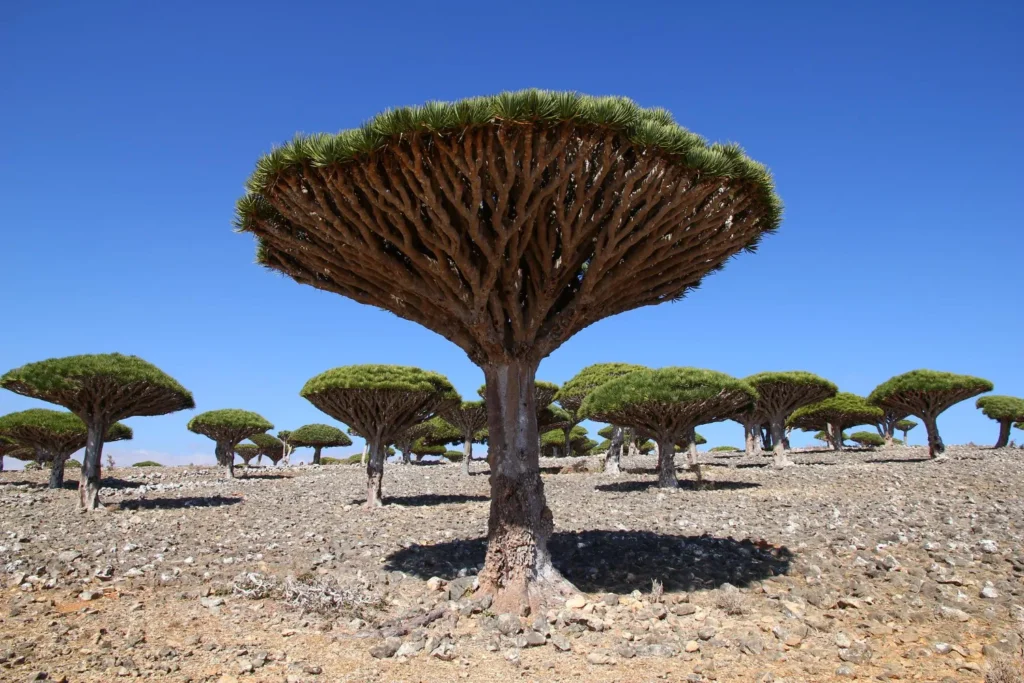
Its red sap, called “dragon’s blood,” has been used for centuries in traditional medicine, varnishes, and dyes. But its significance is more than aesthetic. The Dragon’s Blood Tree plays a vital role in the island’s ecosystem by providing shelter and food for various endemic species.
Related: 15 Most Unique Trees in the World That Will Leave You in Awe
Interesting Facts:
- The tree only thrives at higher elevations.
- It absorbs moisture through its leaves and channels it to the roots.
- Red resin is harvested sustainably by local tribes.
Key Takeaway: The Dragon’s Blood Tree isn’t just a visual marvel—it’s an ecological cornerstone on Socotra.
3. Uncharted Caves and Hidden Karst Landscapes
Beneath the surface of the island lies an unexplored network of limestone caves and karst formations. The Hoq Cave, for instance, is over 2.5 kilometers long and filled with ancient stalactites, inscriptions, and archaeological mysteries.
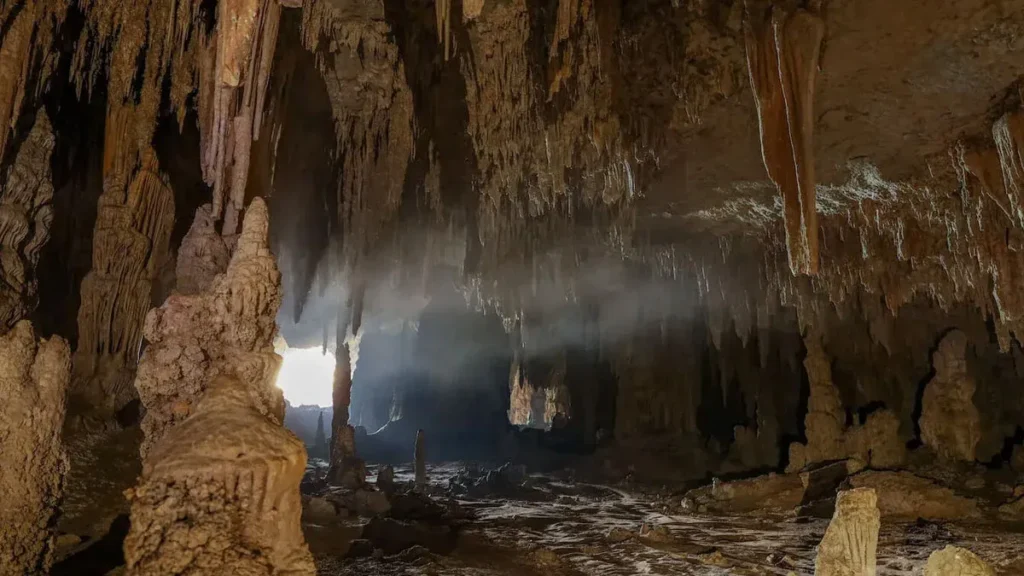
Researchers recently discovered pictographs and writing in ancient Indian, South Arabian, and Greek scripts inside these caves, hinting at early trade routes across the Indian Ocean.
These subterranean environments also support cave-specific biota like blind insects and fungi, further underlining the uniqueness of the island’s biodiversity.
Key Takeaway: Socotra’s underground world is just as rich and mysterious as its surface.
Read More: Karst Topography: Discover 5 Bizarre Landscapes Formed by Dissolving Earth
4. Marine Biodiversity and Coral Reefs
It’s easy to focus on Socotra’s terrestrial uniqueness, but its marine environment is equally impressive. The waters surrounding the island teem with coral reefs, sea turtles, dolphins, and more than 250 species of reef-building corals.
The archipelago sits at a biological crossroads between the Red Sea, the Arabian Sea, and the Indian Ocean, creating a unique hybrid marine ecosystem.
Read More: Why is the Red Sea called the ‘Red Sea’?
- 730 species of coastal fish
- 300 species of crustaceans
- Extensive seagrass meadows critical for carbon sequestration
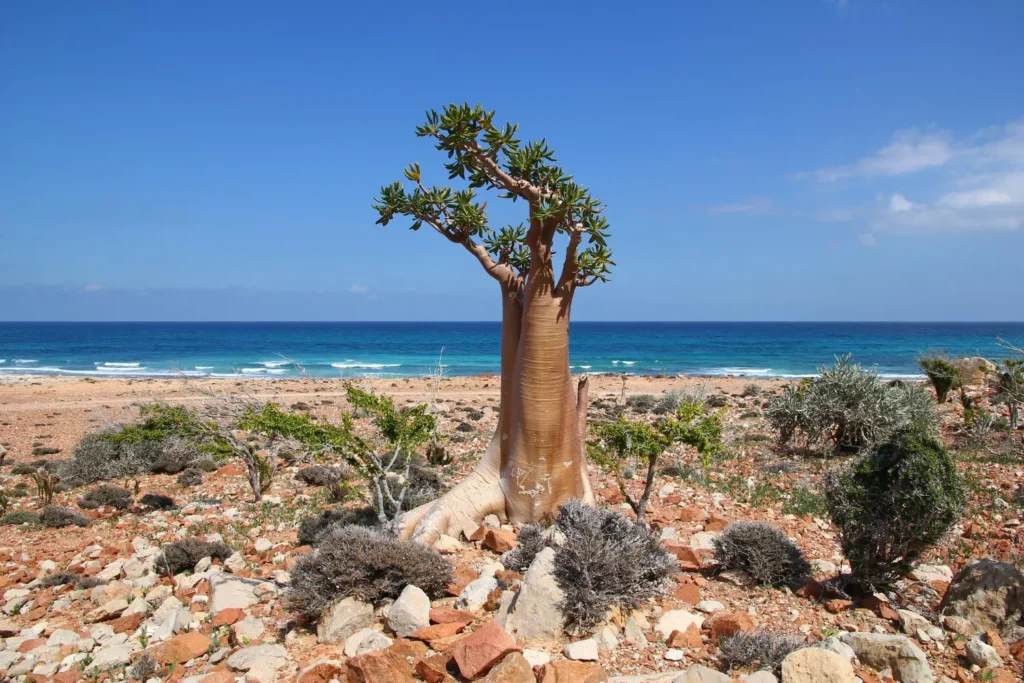
Efforts are underway by international conservation groups to designate Marine Protected Areas (MPAs) around the island.
Key Takeaway: Socotra’s oceans are just as vital to global biodiversity as its forests and mountains.
Read More: Tiny Protectors of the Coral Reefs: How Small Species Play a Big Role in Ocean Health
5. A Human History That Dates Back Thousands of Years
Though often portrayed as a naturalist’s paradise, Socotra has a rich human history. Archaeological evidence suggests human presence on the island since the 1st century AD. This unique island even appears in Periplus of the Erythraean Sea, an ancient Greek maritime guide.
The indigenous Soqotri people speak a unique Semitic language, unrelated to Arabic, and maintain ancient traditions of poetry, medicine, and boat-building.
Read More: Unmask the 10 Most Dangerous Tribal Communities in the World
Cultural Highlights:
- Traditional homes made from palm fronds and coral limestone
- Oral storytelling is still a primary form of historical record
- Ancestral herbal knowledge passed down through generations
Key Takeaway: Socotra isn’t just biologically rare—it’s culturally rich.

6. Limited Infrastructure Preserves Its Purity
Modern development has largely bypassed Socotra, partly due to its remoteness and Yemen’s ongoing political instability. There are no high-rise buildings, no commercial tourism hubs, and very few paved roads.
While this limits access, it also means the island remains relatively untouched. Most residents live sustainably through fishing, small-scale farming, and herding goats.
The trade-off? A largely intact ecosystem that continues to function without heavy human interference.
Key Takeaway: The island’s minimal infrastructure is a hidden advantage in conservation.
Read Also: Why the Economic Value of Guano Is More Important Than Ever: 8 Key Factors
7. UNESCO World Heritage Recognition
In 2008, Socotra was designated a UNESCO World Heritage Site for its “outstanding universal value.” The classification is aimed at preserving its fragile ecosystems and endemic species.
UNESCO and the Yemeni government, along with NGOs like the Critical Ecosystem Partnership Fund, continue to fund studies and conservation initiatives despite regional instability.
Key Takeaway: Global recognition underscores the ecological and cultural importance of this distinctive island.
Related: 10 Landmarks That Should Be Considered Wonders of the World
8. Climate Challenges and Conservation Efforts
Climate change poses a severe threat to the unique ecosystems of the Indian Ocean island. Increased cyclonic activity, rising sea levels, and unpredictable rainfall are already affecting the flora and fauna.
Recent satellite data from NASA’s Earth Observatory in March 2025 showed coastal erosion accelerating on the eastern shores of the island. Local species, including the Socotra Buzzard and Frankincense trees, are showing signs of stress.
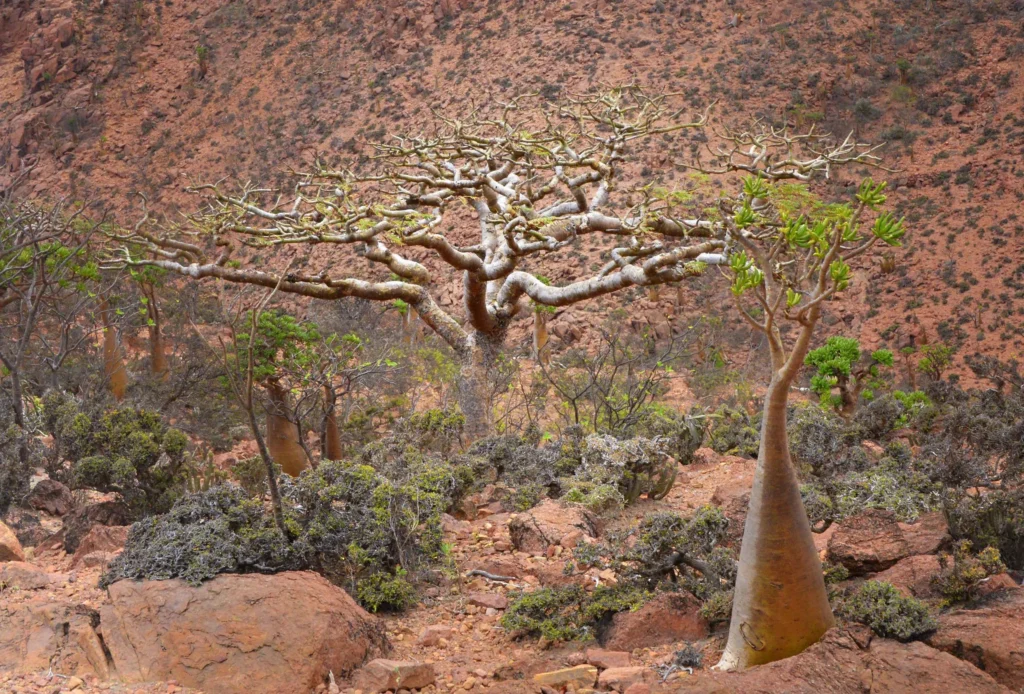
Conservation groups are stepping in with community-led programs, climate education, and sustainable livelihood projects. But more international attention and funding are essential.
Key Takeaway: The island’s future hinges on global cooperation and timely conservation action.
Related: Negative Effects of Climate Change on Indigenous People of the World
Conclusion
As we’ve seen, Socotra isn’t just another remote island—it’s a natural museum of evolution, a cradle of human culture, and a cautionary tale about ecological fragility. Its nickname as the Galapagos of the Indian Ocean isn’t hyperbole. From the surreal silhouette of the Dragon’s Blood Tree to its cryptic cave systems and untouched coral reefs, the island offers a glimpse into what Earth might have looked like in its primordial state.
But the island’s continued survival is not guaranteed. Climate change, geopolitical issues, and lack of awareness pose looming threats. That’s why sharing knowledge about its significance is more important than ever. Whether you’re a biologist, traveler, or curious reader, we all share responsibility in preserving such irreplaceable natural wonders.
Let’s keep talking about Socotra. Let’s keep it alive—not just in photographs, but in policy, action, and consciousness.
FAQs
1. Where is Socotra located?
Socotra lies in the Indian Ocean, southeast of Yemen and northeast of Somalia.
2. Why is Socotra called the Galapagos of the Indian Ocean?
Because of its high level of biodiversity and endemic species, much like the Galapagos Islands.
3. Can tourists visit Socotra?
Yes, but travel requires careful planning due to limited infrastructure and flight routes.
4. What is the Dragon’s Blood Tree?
An umbrella-shaped tree known for its red sap and ecological role in Socotra’s environment.
5. Is Socotra safe to visit?
Generally yes, but travelers should stay updated on Yemen’s political situation and consult trusted travel advisories.
6. What kind of animals live on Socotra?
Unique reptiles, birds, bats, and marine species that are found nowhere else on Earth.

