
Air today, gone tomorrow: how dirty air defines the future we all share.
Introduction
Have you ever wondered which corner of our planet breathes the dirtiest air? Which are the most polluted countries in 2025?
The truth is staggering. According to World Population Review (2025), several nations still choke under PM2.5 levels far beyond the World Health Organization’s safe limit of 5 µg/m³.
From industrial fumes over South Asia to desert dust in Central Africa, the most polluted countries tell a story that’s both urgent and deeply human. Poor air quality affects over 99% of the world’s population, cutting life expectancies and fueling climate change.
In this article, we’ll explore the 10 most polluted countries in the world in 2025, understand what drives their pollution crisis, and see how global efforts might clean the air we all share.
Read Also: Air Pollution | How to Measure it and its 7 Severe Effects
How We Ranked the Most Polluted Countries
Before diving into the list, let’s clarify what “most polluted” means.
We use the global PM2.5 index — measuring fine particulate matter smaller than 2.5 micrometers — the deadliest type of air pollution because it penetrates deep into our lungs and bloodstream.
The 2025 rankings below are drawn from World Population Review, supported by IQAir and WHO databases. Metrics considered include:
- Average annual PM2.5 concentration (µg/m³)
- Urban industrial emissions
- Population density and traffic
- Fossil fuel dependency
- Waste burning and household fuels
Read Also: When Fossil Fuel Will Run Out? Can Fossil Fuels be Renewed?
Table: The Most Polluted Countries 2025
| Rank | Country | Average PM2.5 (µg/m³) | Primary Pollution Source |
| 1 | Chad | 91.8 | Desert dust, open fires |
| 2 | Bangladesh | 78.0 | Industry, brick kilns, traffic |
| 3 | Pakistan | 73.7 | Vehicle exhaust, coal, smog |
| 4 | DR Congo | 58.2 | Biomass burning, deforestation |
| 5 | India | 50.6 | Coal, traffic, construction |
| 6 | Nigeria | 44.5 | Oil refining, open waste burning |
| 7 | Egypt | 43.0 | Industrial dust, vehicles |
| 8 | Cameroon | 41.7 | Agricultural fires, fuel wood |
| 9 | Bahrain | 39.5 | Construction, traffic, oil |
| 10 | Indonesia | 37.8 | Peat fires, industrial emissions |
Top 10 Most Polluted Countries in the World 2025
1. Chad — The Dust Bowl of Africa
With an average PM2.5 level of 91.8 µg/m³, Chad tops the list as the most polluted country in the world in 2025.
The Sahel region’s dry climate fuels constant dust storms. Combined with open waste burning and a lack of urban infrastructure, the air becomes nearly unbreathable.
The capital city, N’Djamena, experiences visibility drops due to Sahara dust plumes that travel hundreds of miles, contributing to lung infections and eye diseases.
“When the desert moves, the city holds its breath.”
Read Also: 7000-Year-Old Mummies in the Sahara Desert that Don’t Have DNA Similarities with Modern Man
2. Bangladesh — Industrial Boom, Air Doom
Bangladesh continues its struggle as one of the most polluted countries for over a decade.
In 2025, its PM2.5 level hovers around 78 µg/m³, mainly from thousands of brick kilns surrounding Dhaka.
Rapid urban growth, diesel engines, and unregulated factories worsen the situation. While clean-fuel policies are being drafted, enforcement remains thin.
Key takeaway: urban expansion without environmental checks creates invisible poverty — dirty air that steals both health and opportunity.
3. Pakistan — Smog Capital of South Asia
Pakistan ranks 3rd on the dirtiest countries in the world 2025 list. Lahore’s winter “smog season” has become infamous, blending smoke from crop residue, industrial exhaust, and vehicular traffic.
Average PM2.5 levels reach 73.7 µg/m³ — nearly 15 times above WHO guidelines.
While public awareness has grown, pollution monitoring infrastructure remains limited.
A silver lining: New EV and solar initiatives are gaining traction, hinting at cleaner decades ahead.
4. Democratic Republic of the Congo — The Hidden Crisis
Though often overshadowed by economic and political issues, the DR Congo faces severe environmental degradation. Biomass burning and deforestation push its PM2.5 average to 58.2 µg/m³.
Most Congolese households still rely on wood and charcoal for cooking, releasing dense smoke indoors and outdoors alike.
Air pollution here is less industrial and more domestic — a reminder that poverty and pollution are often two sides of the same coin.
Read Also: How Does Pollution Affect Animals? – 5 Tragic Effects
5. India — A Nation Gasping for Breath
India ranks 5th among the most polluted countries in 2025, with a 50.6 µg/m³ PM2.5 average.
Cities like Delhi, Kanpur, and Ghaziabad repeatedly top global smog charts.
Fossil fuel dependency, construction dust, and stubble burning continue despite awareness campaigns.
However, India’s National Clean Air Programme aims to cut particulate matter by 40% by 2026 — a strong policy step in a country balancing industrial growth with public health.

6. Nigeria — Black Gold, Gray Skies
Nigeria’s oil-rich economy comes with a heavy environmental toll.
Refinery emissions, gas flaring, and open burning push PM2.5 to 44.5 µg/m³.
Major cities like Lagos and Port Harcourt often record air quality worse than Beijing’s peak levels of the past decade.
The country’s environmental ministry is now investing in renewable energy and clean-transport pilots to combat its growing urban haze.
Read Also: Hidden Facts About Black History: Unveiling 7 Untold Stories and Forgotten Legacies
7. Egypt — Smog Over the Nile
Egypt’s iconic skyline often hides behind a dusty veil.
With 43.0 µg/m³ PM2.5, Cairo ranks among the polluted cities in the world where emissions stem from old vehicles, desert dust, and industrial sprawl.
Government programs now include recycling incentives and stricter emissions laws, but enforcement remains challenging in densely populated regions.
8. Cameroon — Burning Forests, Burning Lungs
Cameroon records 41.7 µg/m³ PM2.5 due to widespread slash-and-burn agriculture and charcoal use.
Urban air in Yaoundé and Douala often carries the smell of constant fires — both rural and domestic.
Public data is scarce, making it one of Africa’s most under-monitored yet most polluted countries.
Clean-cookstove campaigns could drastically improve air quality and health outcomes here.
Read Also: Pollution – A Global Issue | 5 Major Effects of Pollution that Damaging Our Planet
9. Bahrain — Tiny Island, Big Air Problem
Though small, Bahrain’s urban density and constant construction elevate its PM2.5 to 39.5 µg/m³.
Vehicle congestion, petrochemical industries, and sandstorms combine to form a cocktail of fine dust particles.
The government has introduced green building codes and emission-reduction projects, but the battle remains uphill.
10. Indonesia — Fires in Paradise
Indonesia closes the list of most polluted countries in 2025 at 37.8 µg/m³.
Seasonal peat fires — often set for land clearing — blanket Southeast Asia in choking haze, affecting neighboring Malaysia and Singapore.
While forest management has improved slightly, illegal burning and industrial expansion continue to threaten air quality and biodiversity alike.
Read Also: Biodiversity Crisis: 5 Shocking Ways We’re Losing Nature’s Riches
What Drives Global Pollution in 2025
Understanding what fuels the crisis of the most polluted countries isn’t just about pointing fingers — it’s about recognizing patterns that repeat across continents. The dirtiest countries in the world 2025 share a dangerous mix of energy dependency, poverty-driven practices, and geographical disadvantages that amplify toxic air. Below, we explore the biggest culprits driving this global emergency.
Read Also: Evolution of the Atmosphere: Toxic World Became Our Life-Giving Air in 4.5 Billion Years
Industrial and Fossil Fuel Dependency
Coal remains the dark backbone of development in many polluted countries in the world. As of 2025, coal-fired power plants account for nearly 36% of global electricity generation but produce over 60% of PM2.5 and CO₂ emissions combined. Nations like India, Pakistan, and Egypt continue to rely heavily on fossil fuels to power factories, transport networks, and urban centers.

Industrial corridors release sulfur dioxide, nitrogen oxides, and heavy metals into the air. In India’s case, thermal power plants and vehicle exhausts contribute nearly 50% of urban air pollution, according to the Centre for Science and Environment.
The most polluted countries 2025—from Bangladesh to Nigeria—often face a double bind: fossil fuels are cheap and accessible, while cleaner alternatives require infrastructure they cannot yet afford. This dependency traps them in a cycle where economic growth comes at the cost of breathable air.
Every smokestack that powers progress also writes a silent obituary for clean air.
Read Also: Unlocking the Truth: Is Geothermal Energy the Ultimate Renewable Resource?
Biomass and Open Burning
In many of the most polluted countries, the pollution isn’t just industrial — it’s domestic. Across South Asia and Sub-Saharan Africa, nearly 2.4 billion people still cook with solid fuels like wood, dung, or charcoal. The World Health Organization reports that exposure to household smoke kills about 4 million people annually, mostly women and children.
Open burning of agricultural waste further compounds the problem. During harvest seasons in Pakistan and northern India, crop residue fires create toxic blankets of smog that drift across borders, turning entire regions into gray zones.
In Cameroon and the Democratic Republic of the Congo, burning woodlands for farming releases methane and fine particulates that contribute to local haze and global warming alike. The dirtiest countries in the world 2025 reveal how energy poverty can be just as lethal as industrial excess.
Read Also: Global Warming | The Shocking Future of Our Planet
Geography and Climate
Some most polluted countries are simply victims of their own geography. Arid nations such as Chad and Egypt suffer relentless dust storms, with Sahara particles traveling hundreds of miles, carrying silica and metals. These natural pollutants merge with human emissions, making the air doubly harmful.
In dense urban basins like Lahore or Delhi, wind stagnation traps pollutants, forming “pollution bowls.” During winter, thermal inversion prevents air from circulating, causing PM2.5 to skyrocket beyond 300 µg/m³ in some cities — nearly 60 times above WHO limits.
Even island nations like Bahrain, surrounded by arid and semiarid deserts and industrial zones, experience dust-laden air that settles over congested highways and construction sites.
Climate change worsens the loop: rising temperatures intensify wildfires, droughts, and dust activity — feeding the same air pollution that accelerates warming.
Urbanization and Unchecked Growth
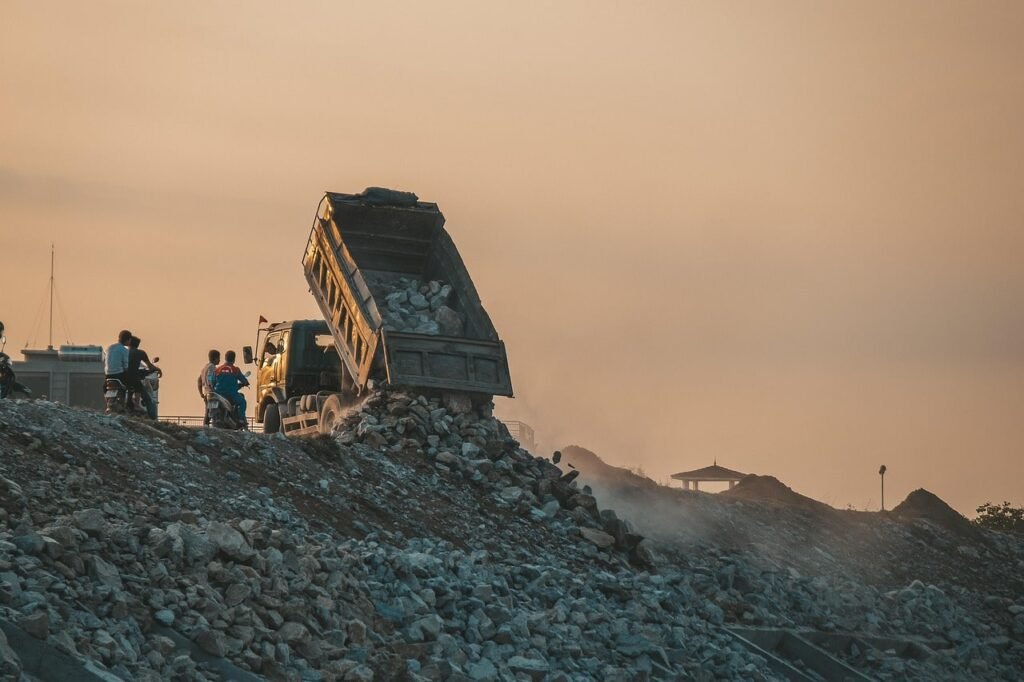
A hidden but potent factor among the most polluted countries in 2025 is uncontrolled urbanization. Cities like Dhaka, Lagos, and Jakarta grow faster than their infrastructure can adapt. Poor waste management, congested traffic, and unchecked construction release microscopic particles daily.
The United Nations Environment Programme predicts that by 2050, 68% of the world’s population will live in cities — and unless cleaner technologies are prioritized now, urban smog could become the defining feature of modern civilization.
In essence, whether it’s coal-fired industries, household stoves, or the wind that refuses to move, pollution in 2025 is a human-made storm intensified by nature’s own design. Until the most polluted countries shift toward renewable energy, efficient waste control, and sustainable planning, the air we share will remain a global inheritance of dust and smoke.
Read Also: Why Urbanization Contributes to Pollution- 5 Alarming Facts About It
Health and Environmental Impacts
Human Toll
Air pollution has quietly become one of humanity’s greatest threats. According to the World Health Organization (WHO), exposure to polluted air causes around 7 million premature deaths every year. Fine particulate matter (PM2.5) — the defining measure for the most polluted countries — infiltrates deep into the lungs and bloodstream, triggering chronic illnesses such as asthma, COPD, stroke, and heart disease.
In the most polluted countries in 2025, like India, Pakistan, and Bangladesh, the situation is dire. WHO estimates that nearly 90% of urban residents in these regions breathe air that exceeds safe limits by over tenfold. Infants and the elderly are the most vulnerable, often suffering irreversible damage to respiratory and cognitive functions. The crisis is not confined to one continent — polluted countries in the world collectively face a rising burden of disease that threatens to erase decades of public health progress.
Read Also: Compare Primary and Secondary Pollutants – Which is more harmful?
Economic Fallout
Beyond the hospital walls, dirty air erodes economies. The World Bank reports that air pollution drains nearly 5% of global GDP annually, mainly due to health care expenses, lost productivity, and premature deaths. In developing nations — many ranking among the dirtiest countries in the world in 2025 — this translates to billions of dollars in unrealized potential.
Industrial dependence and unregulated emissions make it harder for these economies to grow sustainably. Clean energy transitions could boost GDP while reducing air-related mortality, proving that cleaner air isn’t just ethical — it’s economically smart.
Climate Feedback Loop
The most polluted countries contribute heavily to a vicious climate cycle. Pollutants like soot and black carbon absorb sunlight, trapping heat in the atmosphere and accelerating glacial melt in regions such as the Himalayas.
As dirty air warms the planet, it alters rainfall patterns and intensifies droughts — fueling even more fires and emissions. What begins as a local smog crisis evolves into a global climate imbalance, linking every human breath to the planet’s fever.
Read Also: Lost Glaciers in 2025: How Climate Change is Rewriting Earth’s History
Efforts and Emerging Hope
Despite grim numbers, there’s progress.
Countries like India, Pakistan, and Indonesia are expanding solar power, enforcing emission caps, and transitioning toward electric transport.
Global frameworks like the Paris Agreement and the WHO Air Quality Guidelines push accountability and funding for cleaner technology.
Change is possible when science, policy, and people align.
Read Also: Role of solar energy in sustainable development
Why We All Should Care
Air doesn’t recognize borders. Pollutants from one continent can drift across oceans, influencing weather and health thousands of miles away.
As Americans, understanding which countries are the most polluted helps us recognize our shared atmosphere — and our shared responsibility.
Clean air isn’t a luxury; it’s the first condition for life.
Key Takeaway
The ten most polluted countries in the world 2025 show that progress and pollution often rise together — but awareness, innovation, and accountability can rewrite that equation.
Read Also: Green Hydrogen: The Fight for Global Energy Dominance
Conclusion
The most polluted countries of 2025 illustrate a global challenge — balancing economic growth with breathable air. From the deserts of Chad to the deltas of Bangladesh, the story is the same: humanity’s progress must evolve toward sustainability.
Each nation carries its struggle, but together, the data speaks hope — where awareness rises, action soon follows.
We may breathe the same air, but we can also share the same responsibility to keep it clean.
FAQs
1. What does PM2.5 mean?
PM2.5 refers to airborne particles smaller than 2.5 micrometers. They’re small enough to enter the bloodstream, causing heart and lung diseases.
2. Why are South Asian countries among the most polluted?
High population density, fossil fuel dependence, and weak enforcement make air quality control difficult across India, Pakistan, and Bangladesh.
3. Are these pollution rankings reliable?
Yes — data comes from World Population Review 2025, IQAir, and WHO, based on satellite readings and ground-level monitors.
4. How can individuals reduce air pollution?
Using public transport, conserving energy, planting trees, and avoiding waste burning all contribute to cleaner local air.
5. Which country improved the most in recent years?
Indonesia and India have made measurable gains through stricter regulations and expanding renewable energy use.