

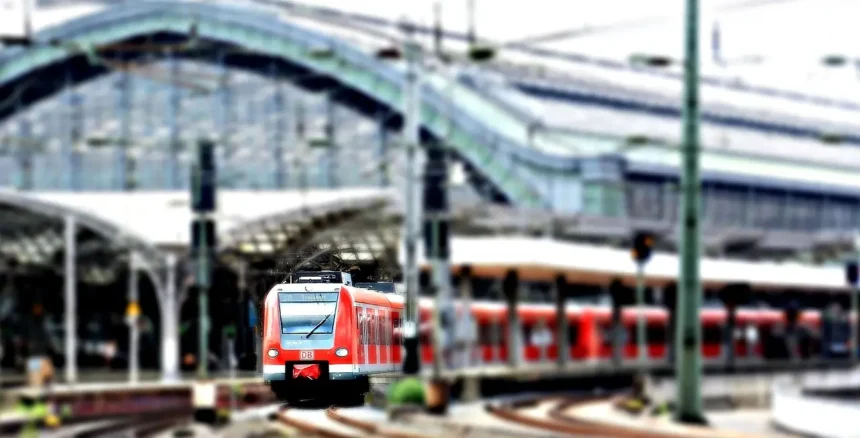
“Fast as a bullet, smooth as silk”—that phrase doesn’t quite capture the thrill of boarding one of the fastest trains in Europe, yet it comes close. In 2025, we find ourselves witnessing an era where speed, innovation, and luxury on rails intersect across the continent. We’ll explore the top 5 fastest trains in Europe this year—machines that aren’t just about velocity, but about engineering, comfort, and redefining travel itself.
Introduction
Have you ever wondered how fast we can travel without leaving the Earth’s surface? What if the journey itself became the experience, not just the transport? In the U.S., high-speed rail is often discussed—but in Europe, the legacy and innovation of the continent’s fastest trains already shine. Statistics show that Europe’s high-speed rail network spans over 10,000 km and continues to expand.
We’ll guide you through five standout trainsets—the ones leading the pack in 2025 in terms of speed, design, and luxury. For each, we’ll dig into why they matter: how fast they go, what they offer, and why they rank among the fastest railsystems in existence today.
Let’s strap in.
Read Also: 10 Best Places to Visit in Europe This Winter
Quick Comparison Table
| Rank | Train Name & Model | Country / Operator | Max Certified Speed* | Commercial Service Speed | Highlights |
|---|---|---|---|---|---|
| 1 | TGV M (Avelia Horizon) | France / SNCF Voyageurs | 320 km/h (design up to 350 km/h) | 320 km/h planned | Modular design, flexible car count, next-gen |
| 2 | Frecciarossa 1000 (ETR1000) | Italy / Trenitalia | 360-400 km/h design | 300 km/h certified | Top Italian train, network-wide reach |
| 3 | ICE 4 | Germany / Deutsche Bahn | ~265 km/h (design higher) | ~250-300 km/h in service | German engineering, modular train length |
| 4 | AVE S-103 (Velaro E Series) | Spain / Renfe | 350 km/h certified | ~300-310 km/h commercial | Spain’s high-speed network leader |
| 5 | Eurostar e320 | UK / France / Belgium (Eurostar) | ~320 km/h (Velaro specification) | ~300 km/h across UK-Europe links | Cross-border speed + luxury service |
Speeds reflect the latest public certification or design figures; actual service speed may vary by infrastructure and country.
This table gives us the landscape: the fastest trains in Europe, from different countries, each with its own story. Now we’ll dig deeper, train by train.
Read Also: 10 Most Polluted Countries in the World in 2025
1. TGV M (Avelia Horizon) – The Next-Generation French Speed Icon

Record Speed & Technology
When one speaks of European high-speed trains, the French legacy of the TGV line looms large. The trainset known as TGV M, built by Alstom for SNCF Voyageurs, is the fifth generation, branded “Avelia Horizon”. It boasts a design top speed of up to 350 km/h, though its certified service speed is listed as 320 km/h.
The modular design allows car lengths of 7, 8, or 9 coaches, and the system is built with greater efficiency and adaptability.
Passenger Experience & Comfort
Beyond raw speed, the TGV M delivers new levels of onboard luxury: improved accessibility, reconfigurable interiors (first class to second class conversion), and refined energy usage. For travelers from the U.S. eyeing Europe’s rail scene, this train exemplifies how top trains in Europe are not just fast, but smart.
Key takeaway
Even among the fastest trains in Europe, the TGV M stands out for its blend of cutting-edge design + passenger focus. It signals how rail travel can be both ultra-fast and deeply comfortable.
Read Also: Top 5 Most Popular and Longest Roads in the US That Will Blow Your Mind
2. Frecciarossa 1000 – Italy’s Red Arrow
Italian Engineering & Record Figures
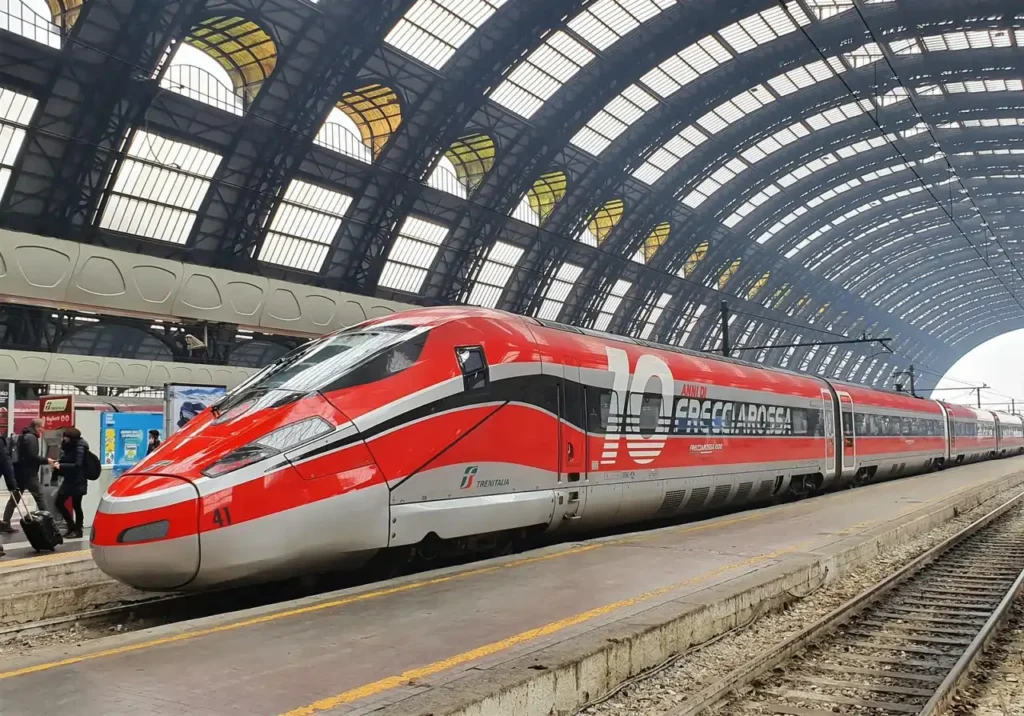
In Italy, the name Frecciarossa (“Red Arrow”) conveys speed. The latest model, the Frecciarossa 1000 (also known as ETR1000), is certified for up to 300 km/h commercial operation, but its design speed reaches 360–400 km/h. It is explicitly built for pan-European networks.
Routes, Sustainability & Luxurious Touches
From Rome to Milan to Naples, the Frecciarossa 1000 stretches across Italy and now even links into Spain via Trenitalia’s international services. Operated by Trenitalia, it offers premium amenities, superior speed, and strong environmental credentials through efficient design.
Key takeaway
When we talk about the fastest trains in Europe, the Frecciarossa 1000 shows how high speed meets luxury + network breadth—not just a straight sprint, but smart connectivity.
3. ICE 4 – Germany’s Flagship of Efficiency

Engineering Precision & Network Integration
Germany’s high-speed train spearhead, the ICE 4, part of the Deutsche Bahn fleet, emphasizes flexibility and efficiency. While its operational speed is lower than some peers (~250-300 km/h), its design and modularity make it the backbone of European high-speed rail.
Why It Matters for U.S. Travellers
The ICE 4 may not top the raw speed table, but for American audiences interested in the fastest rail systems and high-speed rail demonstration models, Germany’s approach demonstrates reliability, standardization, and integration.
Key takeaway
Speed isn’t just about maximum km/h—it’s also about how many passengers you serve, how often you depart, and how the system works. ICE 4 delivers that in spades.
Read Also: Door to Hell of Turkmenistan: The Eternal Flame That Defies Time
4. AVE S-103 (Velaro E) – Spain’s Pride of the Tracks

Spain’s High-Speed Ambition
Spain’s high-speed rail network is among the most extensive in Europe, and the AVE S-103 trains (part of the Velaro family by Siemens Mobility) are among its fastest. The train is certified for up to 350 km/h, though in practice, commercial operation is generally around 300–310 km/h.
Experience & Route Profiles
From Madrid to Barcelona to Málaga, these trains allow U.S. travellers to imagine European inter-city travel that rivals flying—with more comfort, less hassle. For the “luxury trains in Europe” tag, the AVE services stand out.
Key takeaway
The AVE S-103 demonstrates that the concept of top trains in Europe isn’t just French or Italian—it’s truly pan-European. Spain encapsulates that.
5. Eurostar e320 – Connecting Capitals at Lightning Speed
Cross-Border Speed & Prestige
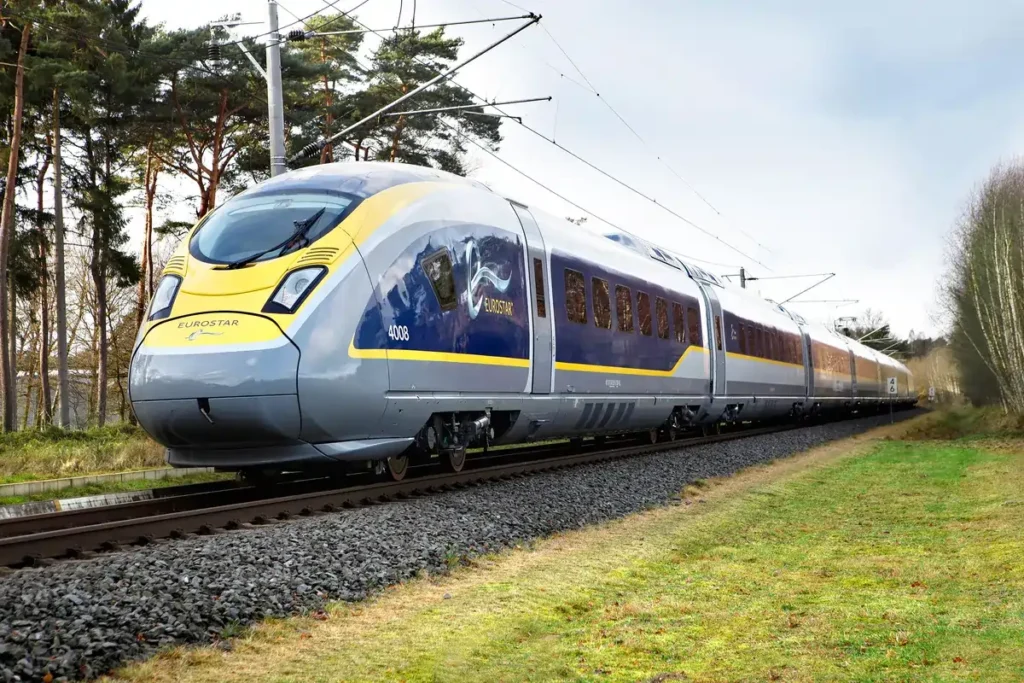
The Eurostar e320 train runs between London, Paris, and Brussels (and beyond). With a top commercial speed of around 300-320 km/h, it delivers one of the most visible embodiments of European high-speed trains crossing borders and time zones.
Luxury Service + Speed
Onboard, travellers get premium service, comfortable seating, WiFi, food, and efficient city-centre to city-centre service. In terms of “luxury trains in Europe”, Eurostar sets a benchmark.
Key takeaway
When we talk about the fastest trains in Europe, the journey experience matters. Eurostar blends speed, cross-border connectivity, and comfort elegantly.
Read Also: Top 20 Most Beautiful National Forests of America: Where Nature’s Wonders Come Alive
How Europe Became the Global Leader in High-Speed Rail
Looking at this group of five, we see some common threads:
- Massive investment in dedicated high-speed rail lines and signalling systems.
- Modular train design allowing varied length and flexible car configurations (notice TGV M, ICE 4).
- Emphasis on passenger experience—comfort, luxury touches, connectivity.
- Sustainability as a secondary driver (lighter materials, reclaimed energy).
Because of these, the fastest trains in Europe aren’t just fast—they align with system-wide thinking about travel, environment, and comfort.
Future of High-Speed Rail in Europe (Beyond 2025)
Looking ahead, many rail operators across Europe are already pushing the envelope: what’s next after 300+ km/h? A few forward-looking notes:
- Hydrogen-powered high-speed train prototypes.
- Even faster trainsets (400 km/h+ commercially) are being tested and certified.
- Expanded cross-border rail corridors for seamless travel without changing trains.
- Smart-rail integration with apps, on-board entertainment, and dynamic routing.
For U.S. audiences: these developments hint at what could one day happen in North America.
Key takeaway: The label of fastest trains in Europe will evolve—curiosity today means staying informed for tomorrow.
European vs Asian Fastest Rail Systems: A Battle of Speed and Innovation (2025)
In 2025, the competition between the fastest trains in Europe and Asia’s lightning-quick rail networks has reached new heights. Both continents showcase exceptional engineering, but their philosophies differ. While European high-speed trains emphasize cross-border comfort, safety, and luxury, Asia’s fastest rail systems focus on ultra-high velocity, futuristic design, and mass connectivity.
Europe’s top trains in Europe — like France’s TGV M (Avelia Horizon), Italy’s Frecciarossa 1000, and the Eurostar e320 — maintain speeds of 300–350 km/h, blending speed with luxury trains in Europe styling, superior onboard comfort, and energy efficiency. Europe’s network prioritizes passenger experience, interoperability between countries, and environmental sustainability.
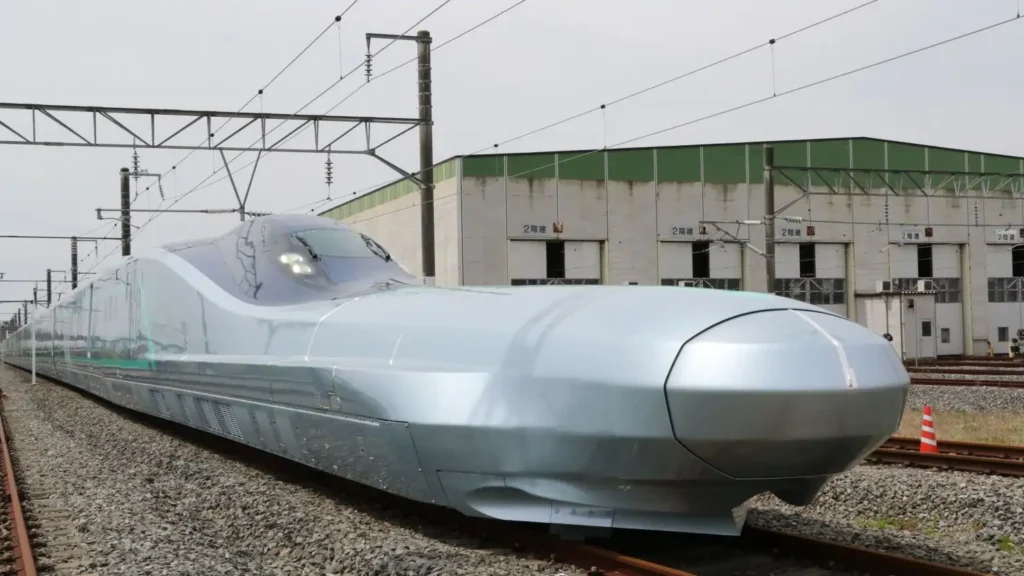
In contrast, Asia leads with raw velocity. Japan’s Shinkansen ALFA-X, China’s CR400AF “Fuxing”, and Shanghai Maglev redefine the limits of high-speed trains in Europe’s counterparts. The Maglev, for instance, achieves 430 km/h, while China’s new prototypes have surpassed 600 km/h in test phases — a striking leap in the evolution of fastest rail systems. These trains exemplify Asia’s drive toward record-breaking technology, urban integration, and next-generation propulsion.
The European model balances innovation with heritage; the Asian model prioritizes scale and futuristic ambition. Both continents demonstrate how human ingenuity can reshape mobility — Europe by perfecting comfort, Asia by chasing absolute speed.
Read Also: 7000-Year-Old Mummies in the Sahara Desert that Don’t Have DNA Similarities with Modern Man
Comparison Between Europe’s and Asia’s Fastest Rail Systems
| Feature | Europe | Asia |
|---|---|---|
| Representative Trains | TGV M, Frecciarossa 1000, Eurostar e320 | CR400AF Fuxing, ALFA-X Shinkansen, Shanghai Maglev |
| Top Operational Speed | 320–350 km/h | 400–600 km/h (tested) |
| Focus | Comfort, Safety, Cross-border Connectivity | Speed, Capacity, Technological Advancement |
| Track System | Conventional + Electrified High-Speed | Magnetic Levitation + Electrified |
| Passenger Experience | Luxury, Sustainability, Quiet Cabins | Efficiency, Rapid Turnaround, Innovation |
| Network Reach | Multi-country EU integration | Domestic + Inter-city mega networks |
| Infrastructure Type | Shared and dedicated HSR tracks | Dedicated high-speed corridors + Maglev lines |
Key takeaway:
While the fastest trains in Europe define elegance, precision, and sustainable luxury, Asia’s fastest rail systems dominate in raw technological power and unprecedented speed. Together, they set global standards for European high-speed trains and high-speed trains in Europe, aspiring toward the next era of transportation excellence.
Conclusion
We’ve traveled through five of the standout fastest trains in Europe for 2025: the French TGV M, Italy’s Frecciarossa 1000, Germany’s ICE 4, Spain’s AVE S-103, and the cross-border Eurostar e320. Each one isn’t just about breaking speed records—but about redefining how rail travel feels, how swiftly it happens, and how comfortably we do it.
From modular engineering to luxury interiors, from 300 km/h+ speeds to seamless international links, these trains show that speed isn’t an end in itself—it’s a means to better travel. If you’re based in the U.S. and you imagine a rail future that rivals or even beats flying in comfort and convenience, then Europe’s leaders right now are worth watching.
So here’s to the rails: may they remain fast, sustainable, and luxurious. Travel isn’t just about destination—it’s how you get there.
“All aboard.”
FAQs
1. What qualifies a train as one of the “fastest trains in Europe”?
Typically, a train that operates on a dedicated high-speed network, with commercial speeds around 300 km/h or more, and an advanced design. Certification, infrastructure, and regular service all matter.
2. Are the “fastest rail systems” always usable by ordinary passengers?
Yes—most of the trains above operate in scheduled service. However, the maximum theoretical speeds (design speed) may exceed actual service speed due to track/infrastructure constraints.
3. How does luxury factor into Europe’s high-speed trains?
Luxury is embedded in comfort: spacious seating, WiFi, onboard amenities, smooth ride quality. Brands like Eurostar or Frecciarossa 1000 explicitly promote a premium experience.
4. Will future trains go even faster than those listed in 2025?
Yes—ongoing research and infrastructure upgrades aim for 350-400 km/h+ commercial speeds, hydrogen propulsion, and more modular systems. The five trains above represent the state-of-the-art in 2025, but evolution continues.