

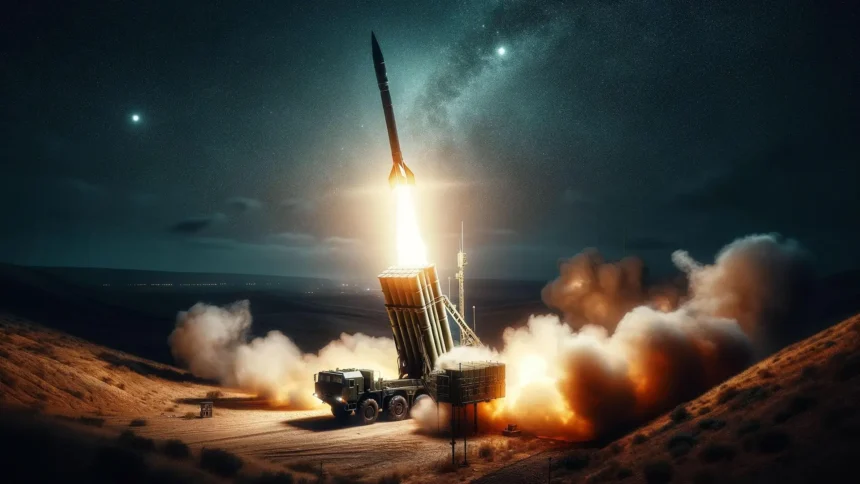
“When power meets fear, the world rewrites its rules.”
In today’s strategic landscape, nothing captures this tension more than the global race for hypersonic weapons. As we navigate a decade defined by rapid shifts in defense technology, we find ourselves asking: Which nations truly lead this race? How are these weapons transforming international security? And what does this mean for us here in the United States?
The conversation around hypersonic missile-owning countries has moved far beyond simple military rankings. According to U.S. defense assessments, hypersonic weapons travel above Mach 5, maneuver mid-flight, avoid conventional radar tracking, and reduce response time from minutes to seconds. In 2024, global military reports estimated over 23 major test launches across the U.S., China, and Russia alone — a clear sign of accelerating competition.
As we explore the giants shaping the hypersonic era, we’ll walk through technical realities, historical context, scientific evolution, and geopolitical implications, all from a first-person plural lens — because this global arms race affects all of us.
Understanding Hypersonic Weapons — Speed, Strategy, and Disruption
Hypersonic weapons operate in a velocity range where traditional missile defense systems struggle to react. We categorize them into two types:
Hypersonic Glide Vehicles (HGVs)
An HGV is launched by a rocket but glides freely at hypersonic speed, maneuvering across unpredictable trajectories.
Hypersonic Cruise Missiles (HCMs)
Powered by scramjet engines, these cruise missiles sustain high velocities throughout flight, maintaining altitude and direction changes.
Why They Matter
- They can bypass missile shields
- Their flight paths are non-ballistic
- Their acceleration compresses decision-making windows
- They support both strategic and tactical missions
As the list of countries with hypersonic missiles expands, the core concern isn’t just possession — it’s operational maturity.
Read Also: 5 Amazing Water Supply Techniques in Dry Regions of the World
The Big Three — U.S., China, and Russia
These three powers form the axis of modern hypersonic capability. Their investments reflect not only military ambition but also national identity, scientific heritage, and geopolitical goals.
1. United States — Innovation Driven by Security Imperatives
When we look at hypersonic missile-owning countries, the United States stands firmly at the forefront, driven by a blend of scientific heritage, strategic necessity, and forward-leaning defense technology. Our leadership in aerospace didn’t emerge overnight — it has been shaped by decades of research through experimental X-planes, cutting-edge propulsion concepts, and a national culture that values innovation for security. Because hypersonic weapons redefine both speed and strategic advantage, we’ve invested heavily in diverse development lines that match different mission demands.
One of our flagship systems, the ARRW (Air-launched Rapid Response Weapon), was engineered to provide rapid, high-precision global strike capability. It reflects our attempt to reduce decision-to-strike timelines and respond instantly to evolving threats. At the same time, the HAWC (Hypersonic Air-breathing Weapon Concept) leverages scramjet propulsion — a major leap in defense technology — allowing missiles to sustain extreme velocities without depending on traditional booster systems.

Our LRHW (Long-Range Hypersonic Weapon) adds ground-launched flexibility, giving the U.S. Army a versatile tool for deterring peer competitors. Meanwhile, OpFires, a tactical ground-based system, is designed to plug into future battlefield networks where speed, mobility, and precision are decisive. Together, these systems show why the U.S. remains a central force among global hypersonic missile-owning countries, with a clear focus on layered capability.
Strategic Purpose
We develop these hypersonic weapons not merely to maintain deterrence, but to ensure we can operate decisively in contested regions. Our long-term strategy integrates space assets, air dominance, and ground mobility, creating a unified defense posture that adapts to modern warfare. Within the community of hypersonic missile-owning countries, our emphasis stays on precision, interoperability, and maintaining technological superiority.
Key Stats
- Multiple hypersonic programs are in advanced testing phases
- Systems designed across Air Force, Army, and DARPA partnerships
- Mission profiles include rapid global strike and regional deterrence
- Focus on scramjet propulsion, maneuverable glide vehicles, and integrated launch platforms
Read Also: 10 Most Thrilling Trekking Routes in the World – Epic Trails for Adventure Seekers
2. China — Rapid Expansion Through Technological Ambition
China’s rise within the circle of hypersonic missile-owning countries has been nothing short of strategic acceleration. Over the past decade, China has poured immense resources into advanced aerospace science, simulation laboratories, and military–industrial integration.
This approach allows China to compress development cycles and iterate faster than many Western analysts initially predicted. As global attention shifts toward Asia, China has anchored its military modernization around hypersonic weapons, framing them as tools of deterrence, regional control, and long-term strategic messaging.
Central to China’s hypersonic portfolio is the DF-17, equipped with the DF-ZF Hypersonic Glide Vehicle (HGV). This system combines high maneuverability with unpredictable trajectories, making interception extremely difficult for traditional missile defenses. For China, the value of such capability extends beyond raw speed — it symbolizes the nation’s expanding influence and its ambition to redefine modern defense technology.

Where the U.S. emphasizes layered capability, China focuses on targeted dominance within the Indo-Pacific theater. By developing hypersonic systems that can engage naval and land-based assets across extended ranges, China aims to weaken the operational comfort of its rivals. This is one reason analysts consistently place China in the top tier of hypersonic missile-owning countries, with capabilities that already challenge regional stability.
China’s military doctrine also hinges on rapid testing and full-spectrum integration. Its hypersonic programs are supported by parallel investments in satellite networks, advanced radars, and AI-assisted targeting systems. Together, these elements establish China not only as a major operator of hypersonic weapons but as a nation intent on shaping future global norms around speed, deterrence, and strategic ambiguity.
Key Stats
- DF-17 system publicly showcased and declared operational
- Estimated speeds above Mach 5 with high maneuvering capability
- Dozens of test launches reported through state-linked sources
- Integrated across space-based and ground-control networks
Read Also: The 6 Tallest Buildings in the World — Stunning Engineering Feats That Changed Everything
3. Russia — Speed as a Symbol of Strategic Power
Russia occupies a defining position among countries with hypersonic missiles, using speed, unpredictability, and strategic theater dominance as pillars of its national defense posture. Unlike other nations that frame hypersonic development as a future necessity, Russia treats hypersonic weapons as a present-day operational tool.
This mindset reflects decades of Soviet-era aerodynamics research, Cold War propulsion experiments, and the country’s persistent ambition to counterbalance U.S. and NATO influence. As a result, Russia’s hypersonic systems emerged earlier than many analysts expected, reshaping global assessments of missile warfare.
The Avangard Hypersonic Glide Vehicle (HGV) stands at the heart of Russia’s strategic messaging. Mounted atop an ICBM, Avangard is designed to travel at extreme velocities — often cited at Mach 20 or higher — while maneuvering throughout its flight. This combination of speed and unpredictability challenges traditional missile-defense architecture.
In parallel, Russia’s Kinzhal air-launched ballistic missile has already been used in limited combat scenarios, making it one of the few operational hypersonic weapons employed during real-time conflicts.

For Russia, these systems are more than tactical assets; they are symbols of national prestige. Being recognized among the elite group of hypersonic missile-owning countries allows Russia to project strength, influence diplomatic negotiations, and maintain leverage in regions where conventional power may no longer be sufficient. Their doctrine emphasizes rapid-strike potential, deterrence through uncertainty, and the ability to breach missile shields that competitors rely on.
Russia’s momentum in this domain is also supported by its focus on next-generation defense technology, including advanced warhead materials, extended-range boosters, and specialized command infrastructure built to manage high-speed engagement protocols. This strategic philosophy keeps Russia at the forefront of the global hypersonic race.
Key Stats
- Avangard declared operational on ICBM platforms
- Kinzhal used in real battlefield conditions
- Estimated top speeds reaching Mach 20–27
- Systems designed for penetrating advanced missile defenses
Read Also: Oymyakon – The Coldest Inhabited Place on Earth: Brutal Truths About Life at -60°C
Table 1: U.S. vs. China vs. Russia — Hypersonic Programs, Capabilities & Strategic Intent (2026 Update)
| Category | United States | China | Russia |
|---|---|---|---|
| Primary Weapon Types | HGV + HCM | HGV | HGV + Air-launched ballistic hypersonic systems |
| Flagship Systems | ARRW, HAWC, LRHW, OpFires | DF-17 / DF-ZF HGV | Avangard, Kinzhal |
| Estimated Speed Range | Mach 5–10 | Mach 5+ | Mach 10–27 |
| Operational Status (2026) | Testing / Pre-deployment | Operational | Operational |
| Strategic Focus | Precision strike, Indo-Pacific deterrence, integrated multi-domain warfare | Regional dominance, anti-access/area denial (A2/AD), Indo-Pacific leverage | Strategic intimidation, nuclear deterrence, shield penetration |
| Testing Frequency | Moderate–High (program-specific) | High, fast iteration cycles | Moderate, focused on operational readiness |
| Integration With Defense Technology | Space-enabled targeting, joint-force interoperability | AI-enabled guidance, satellite networks, advanced simulation labs | Hardened command structures, long-range boosters, thermal-resistant materials |
| Combat Usage | Not yet used in combat | Not publicly confirmed | Kinzhal used in real battlefield scenarios |
| Doctrinal Purpose | Maintain global dominance and rapid response capability | Reshape regional balance and challenge U.S. influence | Undermine missile defenses and reinforce strategic deterrence |
| Strengths | Precision engineering, diversified systems, strong R&D ecosystem | Speed of development, operational deployment, integrated networks | Extreme velocity, combat-tested systems, nuclear delivery platforms |
| Limitations | Delayed timelines, complex procurement cycles | Limited transparency, uncertain long-range accuracy | High cost, maintenance complexity, questionable accuracy claims |
Secondary Hypersonic Developers — Expanding Beyond the Giants
While the U.S., China, and Russia lead the charge, several nations are accelerating their development efforts. These countries do not currently have the same operational capability but contribute meaningfully to the hypersonic ecosystem.
India — A Science-Driven Ascent
India’s HSTDV program (Hypersonic Technology Demonstrator Vehicle) highlights indigenous research and the country’s pursuit of scramjet propulsion. With the upcoming BrahMos-II, India may soon join the operational league of hypersonic missile-owning countries.
France — European Pioneer
France’s V-MaX project represents Europe’s most cohesive push toward maneuverable hypersonic systems. The program’s timeline suggests potential operational readiness by the late 2020s.

Japan — Defense-Oriented R&D
Japan is developing hypersonic glide and cruise systems with an emphasis on precision coastal defense.
Australia — Strategic Collaboration
Australia is working closely with the U.S. through the SCIFiRE initiative, reflecting shared geopolitical concerns and mutual security goals.
Read Also: 5 Mind-Blowing Reasons Why Asking “Is Australia an Island?”
Scientific Principles Behind Hypersonic Flight
Understanding how these weapons operate helps us contextualize their threat.
Aerothermal Heating
At Mach 5+, the friction between air molecules and a missile’s surface produces extreme thermal loads, requiring specialized materials such as ultra-high-temperature ceramics.
Plasma Sheath Formation
At hypersonic speed, a plasma layer can form around the vehicle, disrupting communication signals.
Control System Complexity
Unlike ballistic missiles, hypersonic weapons maneuver unpredictably, demanding sophisticated real-time guidance systems.
The more we analyze the science, the clearer it becomes why very few nations can join the community of hypersonic missile-owning countries.
Why Hypersonic Missiles Are Hard to Intercept
Traditional radar systems are calibrated for predictable trajectories. Hypersonic weapons do not follow these norms.

- Unpredictable flight paths
- High atmospheric maneuvering
- Extremely compressed engagement timelines
- Low-altitude glide reduces satellite tracking
- Insufficient early-warning infrastructure in many nations
This challenge explains why defense technology worldwide is shifting toward new space-based tracking systems, AI-driven predictive modeling, and directed-energy concepts.
Read Also: 7 Mind-Blowing Facts About Solar Atmospheres You Didn’t Know
Geopolitical Consequences of Hypersonic Expansion
The rise of hypersonic weapons doesn’t just shift military doctrine — it reshapes alliances, diplomacy, and global communication.
Indo-Pacific Reconfiguration
China’s advancements push surrounding nations toward stronger partnerships with the U.S.
Europe’s Strategic Awakening
NATO recognizes hypersonic threats as a critical priority area.
U.S.–Russia Tensions
Both nations use hypersonic tests as messaging tools, reinforcing the political weight of hypersonic missile-owning countries.
Arms Control Challenges
Hypersonic weapons do not yet fall neatly into existing missile treaties, making regulation difficult.
Future Outlook — What 2030 Might Look Like
If current trajectories continue, we can expect:
- More automated launch systems
- Expanded hypersonic defense shields
- Decentralized early-warning networks
- Stronger integration between AI and missile guidance
- Additional nations entering the hypersonic missile-owning countries landscape
The next decade will not be defined solely by who possesses hypersonic weapons — but by who can defend against them.
Key Takeaway
The global hypersonic race is no longer theoretical — it is the defining contest of modern defense strategy. As hypersonic missile-owning countries advance their programs, the world enters a new era where speed, unpredictability, and technological mastery will shape global security more profoundly than any weapon system of the last century.
Conclusion
As we step deeper into the 21st century, the narrative around hypersonic missile-owning countries reflects a broader transformation in conflict, diplomacy, and scientific advancement. The U.S., China, and Russia continue to dominate the field, shaping global norms and heightening strategic competition.
Yet the expansion of hypersonic programs across emerging nations signals that the race is only beginning. For us here in the United States, understanding this shift isn’t just an academic exercise — it’s essential to our national security, our technological vision, and our global leadership.
Hypersonic weapons remind us that military power is not static; it evolves with discovery, ambition, and necessity. As the world’s great powers accelerate into the future, one truth becomes clear:
In the battle for speed, whoever leads sets the rules.
FAQs
1. How many countries currently operate hypersonic weapons?
About three nations have fully operational hypersonic systems.
2. Why are hypersonic missiles harder to detect?
Their speed and maneuvering reduce radar reaction time.
3. Can existing missile shields stop hypersonic weapons?
Most systems struggle with maneuverable hypersonic threats.
4. Which country leads the hypersonic race today?
The U.S., Russia, and China remain the primary leaders.
5. Will more countries gain hypersonic capability soon?
Several nations may join within the next decade.