

Introduction
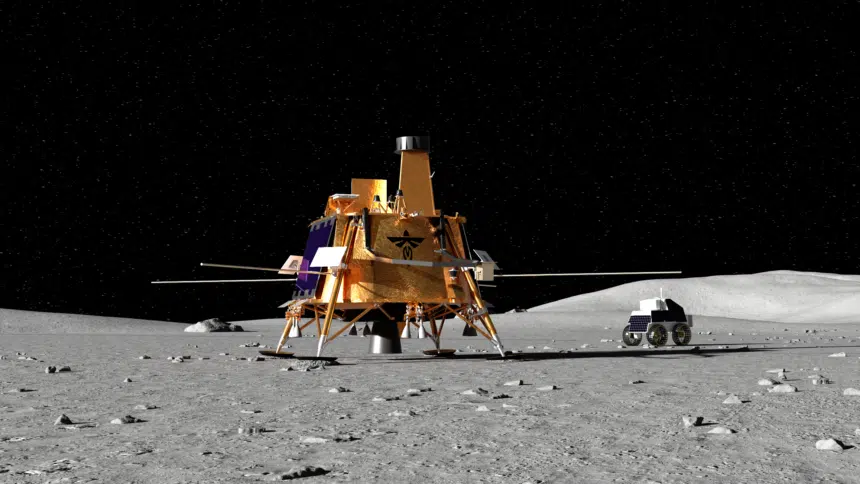
A sleek spacecraft pierces the lunar silence, its engines firing in precise harmony to settle gently on the moon’s dusty surface. That vision became reality on March 2, 2025, as the Blue Ghost lunar lander touched down, etching its name into the annals of space history. Developed by Firefly Aerospace, the Blue Ghost isn’t just another spacecraft—it’s a harbinger of a new era where private innovation and scientific ambition unite to unlock the moon’s mysteries. This historic landing marks a bold step forward, bringing us closer to a future where humanity doesn’t just visit the moon but calls it home.
What is the Blue Ghost Lunar Lander?
The Blue Ghost lunar lander is a marvel of modern engineering, crafted by Firefly Aerospace, a Texas-based company launched in 2014 with a mission to democratize space access. Unlike the government-led efforts of the Apollo era, the Blue Ghost embodies the private sector’s ingenuity. It’s part of NASA’s Commercial Lunar Payload Services (CLPS) initiative, a program designed to outsource lunar deliveries to commercial partners, freeing NASA to focus on bigger goals—like returning humans to the moon.
Named after a rare glowing insect, the Blue Ghost reflects Firefly’s ethos of agility and brilliance. It’s not just a vessel; it’s a bridge between today’s robotic explorers and tomorrow’s lunar pioneers. By partnering with NASA, Firefly proves that private companies can tackle the toughest challenges in space, from landing on the moon to supporting humanity’s long-term cosmic ambitions.
The Journey to the Lunar Surface
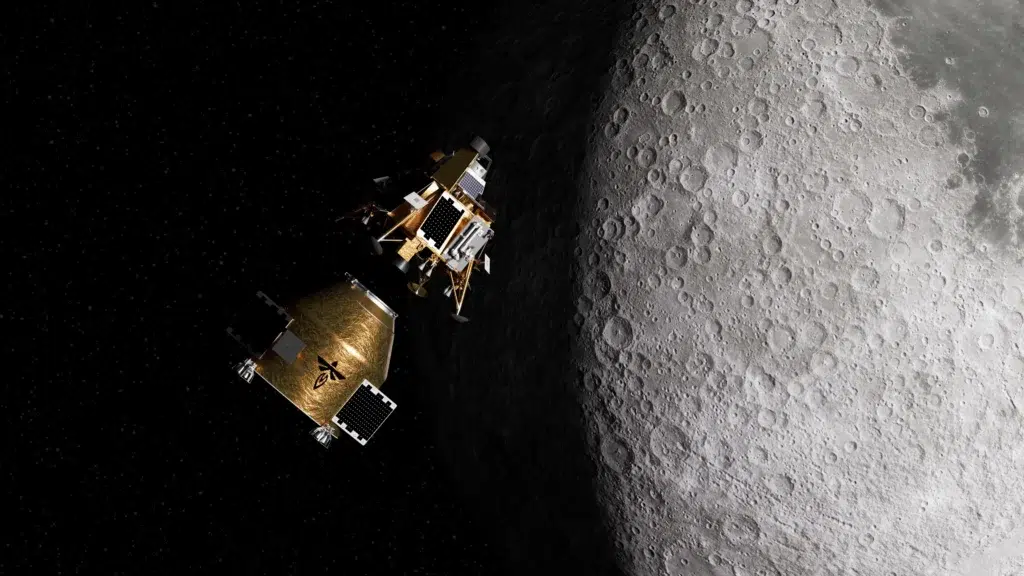
The Blue Ghost lunar lander began its epic voyage on January 15, 2025, launching atop a SpaceX Falcon 9 rocket from NASA’s Kennedy Space Center in Florida. After breaking free from Earth’s grasp, it embarked on a 45-day trek across 384,400 kilometers of space. This wasn’t a straight shot—the Blue Ghost executed a series of orbital adjustments, fine-tuning its path to align with the moon’s orbit.
On March 2, 2025, the real test came: the descent. With no atmosphere to slow its fall, the Blue Ghost relied on its thrusters to decelerate from thousands of kilometers per hour to a gentle touchdown. It landed near Mons Latreille in Mare Crisium, a volcanic region rich with scientific potential. This precise landing showcased the lander’s advanced navigation systems, a feat that set the stage for more complex missions ahead.
Mastering the Moon’s Challenges
Lunar landings are a cosmic balancing act. Without air to provide drag, the Blue Ghost lunar lander had to execute a controlled descent using only its propulsion system. The moon’s gravity—just one-sixth of Earth’s—adds another layer of complexity, demanding pinpoint accuracy to avoid a crash. Firefly’s engineers nailed it, blending autonomous technology with real-time oversight from mission control.
Then there’s the regolith—lunar soil that’s fine as talc and sharp as glass. When disturbed, it can billow into clouds, threatening equipment and visibility. The Blue Ghost tackled this with a smart landing design, minimizing dust kick-up and ensuring its instruments stayed pristine. This success isn’t just a win for Firefly—it’s a blueprint for future lunar operations.
Science Aboard the Blue Ghost
The Blue Ghost isn’t just a lander; it’s a mobile laboratory. It carried 10 NASA-designed instruments to the moon, each with a mission to peel back the lunar veil. Here’s a look at some standouts:
- LISTER (Lunar Instrumentation for Subsurface Thermal Exploration with Rapidity): This tool drills up to 10 feet into the moon, measuring heat flow to reveal clues about its inner workings. Could geothermal energy power future bases? LISTER might hold the answer.
- Lunar PlanetVac (LPV): Using compressed gas, LPV scoops up regolith samples for analysis. Understanding lunar soil could unlock resources like water—which is vital for sustaining life off Earth.
- SCALPSS (Stereo Camera for Lunar Plume-Surface Studies): This camera captures the lander’s descent, studying how engine plumes stir the surface. The data will refine landing techniques, protecting future missions from dust hazards.
- RadPC (Radiation-Tolerant Computer): Space is a radiation minefield. RadPC tests a computer built to endure it, a critical step for reliable tech on long-haul voyages.
These tools aren’t just gathering data—they’re building the foundation for lunar living, from resource extraction to habitat design.
Why the Blue Ghost Mission Matters
The Blue Ghost lunar lander touchdown is more than a technical feat—it’s a turning point. Here’s why it’s a big deal:
- Commercial Space Takes Flight: Following Intuitive Machines’ Odysseus in 2024, the Blue Ghost proves private companies can rival government space programs, accelerating exploration timelines.
- Boosting Artemis Goals: NASA’s Artemis program aims to put boots back on the moon by 2026. The Blue Ghost delivers data and tech demos to make that dream a reality, supporting human landings and beyond.
- Unlocking Lunar Secrets: From heat flow to soil composition, the Blue Ghost’s findings deepen our grasp of the moon’s past and potential, informing science and strategy alike.
- Testing the Future: Radiation-proof tech and dust management aren’t just lunar wins—they’re rehearsals for Mars missions and deep-space adventures.
Firefly’s CEO, Jason Kim, captured the mission’s spirit: “The Blue Ghost’s landing opens a new frontier for commercial space exploration. We’re excited for two weeks of operations that will yield science to shape missions to the moon and Mars.”
NASA’s acting Administrator, Janet Petro, added, “This milestone shows American innovation at its best, enhancing our ability to explore and prepare for human explorers.”
The Road Ahead for Lunar Exploration
The Blue Ghost is a trailblazer, but it’s not alone. NASA’s CLPS program has more robotic missions lined up, each building on the last. These landers and rovers will scout sites, test tech, and gather data, setting the stage for Artemis astronauts to return by 2026. The ultimate goal? A lunar outpost—a permanent human presence that could mine resources, conduct research, and serve as a pit stop for Mars-bound spacecraft.
The Blue Ghost lunar lander also hints at a broader vision. Its navigation, science, and resilience lessons will echo beyond the moon. As private firms like Firefly push boundaries, the solar system feels less like a distant dream and more like a neighborhood we’re ready to explore.
Conclusion
The Blue Ghost lunar lander’s touchdown on March 2, 2025, isn’t just a moment—it’s a movement. It blends human curiosity with cutting-edge tech, showing what’s possible when NASA and private pioneers like Firefly Aerospace join forces. As the Blue Ghost hums along on the lunar surface, it’s lighting a path toward a future where the moon isn’t just a destination but a stepping stone to the stars. This is exploration redefined, and the Blue Ghost is leading the charge.