


Introduction
What happens when the world’s “roof” begins to thaw? And how does that silent shift beneath frozen soils ripple across ecosystems, carbon cycles, and water systems relied upon by nearly 2 billion people in Asia? What will happen if the permafrost thaw in Alpine Tundra, finally claims the very existence of the alpine ecosystem of the Tibetan Plateau?
The Tibetan Plateau—often called the “Third Pole” for holding the largest ice and permafrost mass outside the Arctic and Antarctica—stores enormous frozen carbon, nutrients, and ancient organic matter. As temperatures rise, this frozen ground is losing its stability and transforming rapidly. Scientists warn that the plateau is warming twice as fast as the global average, a shift altering soil chemistry, water flows, vegetation patterns, and landforms.
In this article, we explore the science, history, and emerging ecological consequences of permafrost thaw in Alpine tundra in the Tibetan Plateau, drawing insights from cutting-edge studies, traditional knowledge, and global climate data.
Let’s dig into how thawing ground in this remote highland connects directly to climate futures in the United States and beyond.
Read Also: Lost Glaciers in 2025: How Climate Change is Rewriting Earth’s History
What Is Permafrost & Why the Tibetan Plateau Matters
Permafrost refers to ground that remains frozen for two consecutive years or more. On the Tibetan Plateau, this frozen layer supports unique Alpine tundra, vast grasslands, and fragile wetlands critical to regional hydrology.
Key Facts
- Tibetan Plateau = ~2.5 million sq km
- Permafrost covers ~40% of the region
- Known as Asia’s Water Tower
- Source of major rivers: Yangtze, Mekong, Brahmaputra
This landscape isn’t simply frozen dirt. It holds millennia-old carbon, dormant microbes, locked nutrients, and massive ice wedges. When thawing accelerates—especially abrupt permafrost thaw—ecosystem chemistry and structure shift dramatically.

Read Also: Tundra Biome: Explore the 5 Astonishing Characteristics of it
Evidence of Rapid Thaw in the Third Pole
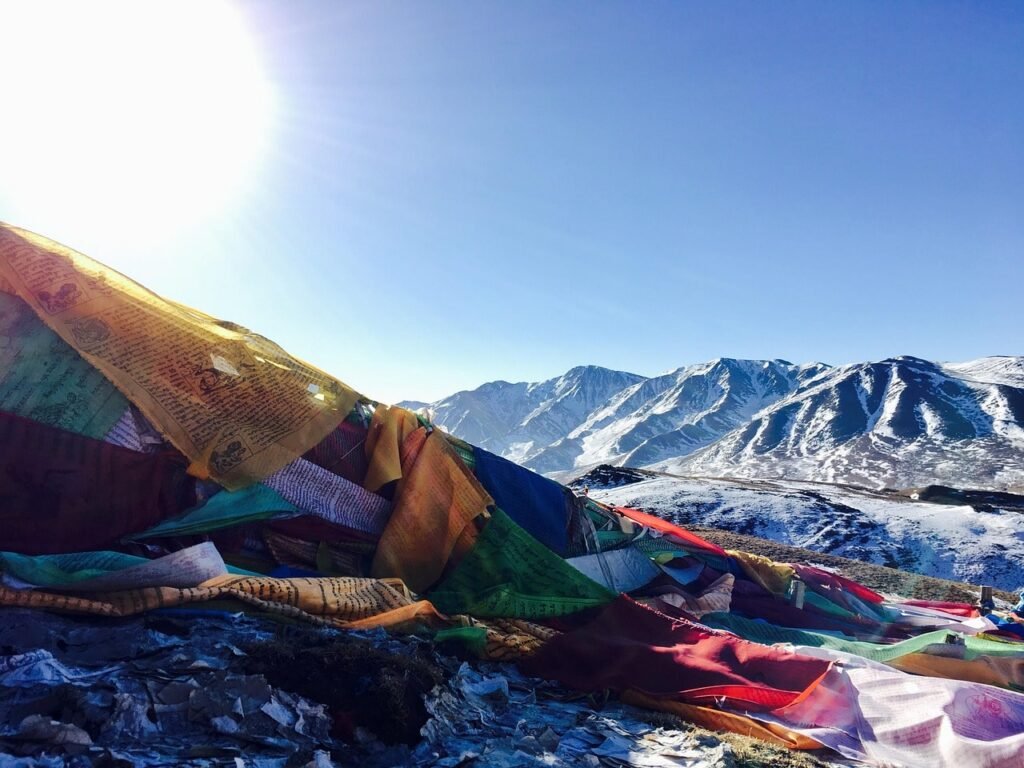
Rising temperatures, declining snow cover, and shifting monsoon dynamics are accelerating permafrost thaw in Alpine tundra, reshaping one of Earth’s most fragile high-elevation ecosystems. Across the Tibetan Plateau, ground once frozen for millennia is destabilizing, triggering abrupt permafrost thaw that disrupts soil structure, water systems, and vegetation processes. This rapid degradation has intensified the development of thermokarst landforms on Tibetan Plateau slopes, valleys, and grasslands—clear indicators of cryospheric breakdown.
As frozen sediment collapses and ice-rich ground melts, thaw ponds, surface depressions, and ground slumps appear, altering slope stability and water distribution. These shifts reshape local hydrology, amplify methane emissions, and redirect nutrient flows. This is not a slow geological drift—this is a rapid ecological pivot where permafrost thaw in Alpine tundra activates microbial communities, accelerates decomposition, and releases ancient carbon and mineral nutrients into modern biological cycles.
A major ecological signal emerging from this transition lies in nutrient chemistry. With thawing soil horizons mixing, buried minerals mobilize, intensifying the phosphorus cycle on permafrost. The release of phosphorus—once locked beneath ice—stimulates fast-growing tundra plants and alters competitive dynamics across vegetation communities. Abrupt permafrost thaw therefore influences both biogeochemical behavior and plant succession in ways that exceed earlier projections.
Satellite records, ground borehole data, and Alpine field observations confirm that the Third Pole thaw is advancing faster than most global climate models forecast. The Tibetan Plateau is shifting into a patchwork of thaw-induced wetlands, collapsing slopes, and thermokarst terrain—evidence of a continent-scale ecological transition. Ultimately, the magnitude and pace of permafrost thaw in Alpine tundra here will influence global carbon budgets, water availability across Asia, and long-term climate patterns.
Read Also: 6 Strong Differences Between Primary and Secondary Ecological Succession
Permafrost Change Indicators in the Tibetan Plateau Region
| Indicator | Recent Observations | Ecological Implication |
| Mean annual air temperature rise | ~0.3–0.4°C per decade | Accelerates permafrost thaw in Alpine tundra |
| Active layer thickening | ~5–25 cm per decade | Increases soil exposure, boosts microbial activity, and nutrient release |
| Area with thermokarst expansion | Estimated growth across >10% of monitored zones | Confirms expanding thermokarst landforms on the Tibetan Plateau |
| Soil phosphorus availability | Measurably higher in thaw-affected zones | Strengthens the phosphorus cycle on permafrost, alters plant competition |
| Carbon emissions potential | Increased CO₂ & CH₄ release from thaw sites | Ties abrupt permafrost thaw to global warming pathways |
| Surface subsidence | Widespread across thaw-ice landscapes | Visible sign of Third Pole thaw and long-term soil destabilization |
This emerging dataset underscores how multi-layered the thaw is — structural, chemical, and biological shifts converging simultaneously.
Read Also: 5 Most Extreme Climates on Earth That Make Survival Impossible
New Scientific Lens: Nutrient & Phosphorus Dynamics
Recent research highlights that thaw does more than release carbon. It also transforms the phosphorus cycle on permafrost, changing how ecosystems grow and compete.
Why phosphorus matters
- Key nutrient for plant development
- Controls microbial metabolism
- Governs soil productivity in cold environments
Read Also: Circles of Life: Decoding the 5 Important Biogeochemical Cycles of the Ecosystem
Groundbreaking finding
- Abrupt permafrost thaw increases plant-available phosphorus—boosting vegetation growth in some places while destabilizing competitive balances in others.
- The Tibetan Plateau now acts as a living “climate laboratory,” showing us real-time nutrient shifts and the complexity of future tundra ecosystems.
- This dynamic makes permafrost thaw in Alpine tundra far more than a carbon-release story—it’s a nutrient and competition transformation.
How does Permafrost Thaw Impact Alpine Tundra?
1. Vegetation Shift & Species Turnover
Alpine meadows on the Tibetan Plateau used to be dominated by sedges and cushion plants, forming a tight, wind-hugging carpet across the high terrain. With permafrost thaw in Alpine tundra, that baseline is shifting. As warming triggers Third Pole thaw, moisture patterns get scrambled — some slopes become wetter as thawed ice releases trapped water, while uplifted ridges dry out. In wetter pockets, shrubs like Potentilla fruticosa push upward, capitalizing on the enriched soils shaped by a changing phosphorus cycle on permafrost. Meanwhile, cold-adapted mosses and lichens fade, unable to compete.
Add abrupt permafrost thaw and emerging thermokarst landforms on Tibetan Plateau terrain — think sinking hollows and waterlogged pits — and the vegetation mosaic becomes even more fragmented. Some areas suddenly bloom; others degrade into bare, eroding ground. It’s an ecological pivot point, and we’re observing a full-scale landscape “rebrand” in real time.
Key takeaway: Thaw doesn’t equal uniform greening—it creates winners and losers.
Read Also: Reappeared Lost Species in 2025: 10 Species That Defied Extinction
2. Carbon-Cycle Feedback
Thaw unlocks ancient carbon pools, fueling microbial respiration and releasing CO₂ and methane. Yet, phosphorus-driven plant growth may partially offset emissions.
This delicate balance depends on:
- Soil moisture
- Rate of thaw
- Vegetation type
- Microbial communities
Permafrost thaw in Alpine tundra now sits at the center of debates over global warming and vegetation uptake.
3. Hydrological Shifts & “Water Tower” Effects
The Tibetan Plateau serves as a massive high-altitude reservoir system, earning it the title of Asia’s Water Tower. As permafrost thaw in Alpine tundra continues, the region’s hydrology undergoes structural change, affecting water storage, seasonal flow, and downstream availability.
Thawing disrupts the frozen ground’s natural capacity to hold ice and regulate water. This transition fundamentally changes the plateau’s role in sustaining rivers such as the Yangtze, Mekong, Indus, and Brahmaputra.

In areas where thermokarst landforms on Tibetan Plateau surfaces appear, the terrain shifts from firm, ice-rich soils to subsided wetlands, thaw ponds, and drainage depressions. These formations increase water pooling, redirect subsurface flow paths, and elevate local groundwater tables.
With permafrost thaw in Alpine tundra progressing, unpredictable groundwater discharge patterns emerge. This hydrological imbalance affects high-elevation wetlands, springs, and headwater streams critical for maintaining ecological balance.
From an ecological perspective, uneven water distribution stresses Alpine meadows and shrublands, increasing soil exposure to wind and water erosion. Grasslands may degrade as root systems lose stability in softened soils, while pockets of waterlogged zones promote sedge and shrub encroachment.
In the broader context of the Third Pole thaw, altered water flows carry downstream consequences for agricultural basins, hydropower networks, and sediment transport systems across South and Southeast Asia. In the United States, research, defense, and climate-policy institutions observe these changes closely due to their influence on global hydrological stability, monsoon systems, and carbon-climate interactions.
Abrupt changes—especially during abrupt permafrost thaw events—can magnify these effects, triggering rapid land collapse, forming thaw lakes, and accelerating groundwater shifts.
Read Also: Water Beyond Earth: How the Universe Created Water Before Our Planet Existed
4. Thermokarst & Land Subsidence
| Feature | Description | Ecological Effect |
| Thaw ponds | Meltwater depressions | Methane release, wetland shift |
| Slumps | Soil and rock collapse | Slope instability |
| Frost mounds collapse | Ice bulges degrade | Drainage change |
| Polygon cracks | Soil fractures | Faster thaw pathways |
Thermokarst illustrates the physical consequences of permafrost thaw in Alpine tundra and reshapes habitat networks.
Read Also: Top 10 Strangest Landforms Around the World
5. Local Communities & Traditional Knowledge
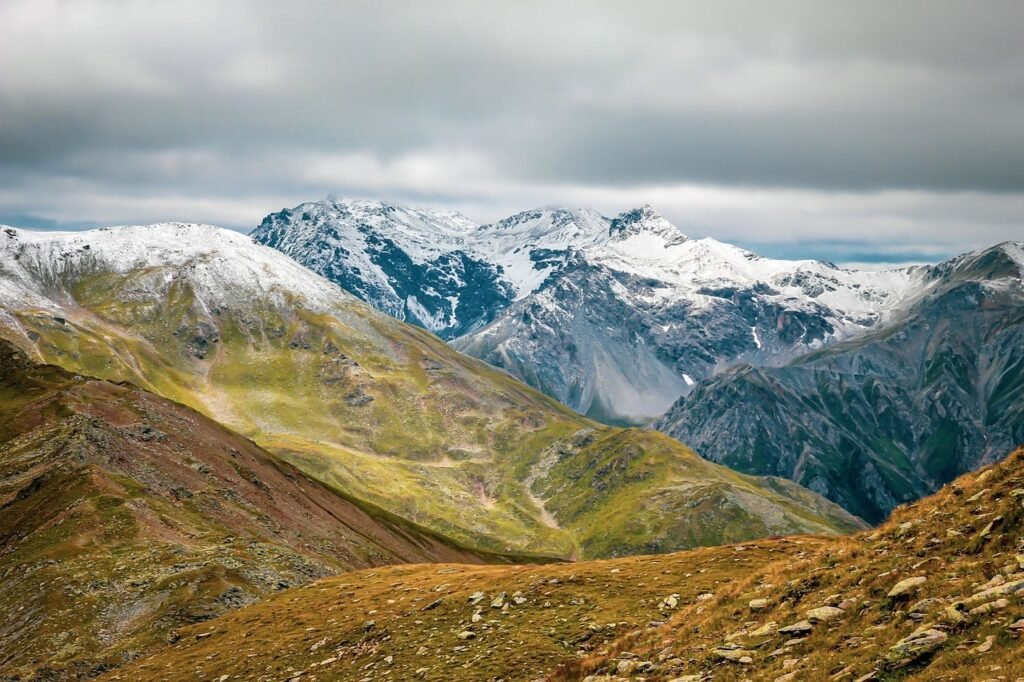
For generations, nomadic herders on the Tibetan Plateau have lived in harmony with the fragile tundra ecosystem. Their way of life has always been closely tied to the rhythms of ice, soil, vegetation, and sky. Through experience passed down over centuries, they developed an intuitive ability to read subtle environmental cues—grass texture, soil moisture, snow crust thickness, wind direction, and seasonal shifts. These lived observations form a natural archive, complementing the scientific record and offering deep insight into the long-term behavior of permafrost thaw in Alpine tundra.
Historic Land-Ice Wisdom
Living across high-altitude meadows and frozen soils, herders learned the language of ice. They knew which slopes froze hardest, where springs first appeared in spring, and how grazing cycles aligned with seasonal ground firmness. Their migration patterns—moving livestock between summer and winter pastures—were designed to preserve vegetation cover, protect soil integrity, and maintain natural water sources.
This ancestral knowledge now provides critical context for understanding rapid environmental changes. While modern climate models quantify temperature and thaw depth, herders describe how certain patches dry earlier, how grazing animals avoid softening ground, and how once-steady glacial melt trickles shift timing. Their lived climate intelligence enriches scientific insight into abrupt permafrost thaw, helping researchers map where early signs of thermokarst appear and how the landscape is used to stabilize ecological balance.
Read Also: The Great Ocean Slowdown: How Melting Antarctic Ice Is Reshaping Our Climate
Visible Changes in the Land
Yet today, this symbiotic relationship between humans and land is strained. Herders report once-lush meadows degrading faster than seasonal recovery allows. Water springs that flowed predictably for generations are becoming irregular—some drying, others flooding unexpectedly. Dust storms rise from eroding earth where ice-rich soils collapse, and new wetland pockets appear where the ground once stayed firm.
Key changes they observe:
- Damaged pasture: Grasses thinning, soil loosening as buried ice melts
- Changing water springs: Altered flow timing due to Third Pole thaw
- Erosion and dust storms: Wind-exposed soils destabilize without ice anchors
- Unpredictable wetlands: Thermokarst ponds forming across grazing paths
These ground-truth experiences illustrate ecological disruption linked to thermokarst landforms on Tibetan Plateau regions—micro-collapses, water pooling, and ground instability—all fingerprints of fast-moving thaw.
Blending Generations of Knowledge
Where scientific instruments measure soil temperature profiles, herders sense change through livestock behavior and shifting vegetation patterns. Their testimony adds a human scale to satellite readings and climate models. Modern studies on nutrient cycles—like the expanded phosphorus cycle on permafrost—align with herder observations that some meadows temporarily green faster while others degrade.
Together, Indigenous knowledge and scientific research form a layered understanding of permafrost thaw in Alpine tundra dynamics. This collaboration bridges traditional ecological literacy and advanced climate analytics, creating a fuller picture of the Tibetan Plateau’s transformation. As warming accelerates and abrupt permafrost thaw advances, both lenses are vital—not only to track environmental change but to honor the communities standing witness on the front line of the world’s highest climate frontier.
Read Also: Negative Effects of Climate Change on Indigenous People of the World
Comparing the Tibetan Plateau to the Arctic
When we evaluate permafrost thaw in Alpine tundra in the Tibetan Plateau versus the Arctic, we recognize shared climate pressures but fundamentally different physical and ecological settings. Both regions act as cryospheric sentinels, yet the pace, drivers, and outcomes of thaw diverge in telling ways.
⏩ Common Patterns Across Both Regions
Abrupt Thaw Events
In both environments, abrupt permafrost thaw transforms ground layers rapidly rather than gradually. Sudden collapse exposes ancient carbon and triggers microbial activity, amplifying greenhouse gas emissions.
Thermokarst Formation
Thermokarst landforms on Tibetan Plateau landscapes mirror those seen in Alaska, Siberia, and northern Canada. Ground subsides, ice wedges melt, and thaw ponds appear, contributing to methane release and hydrological disruption.
Methane Release & Microbial Activation
As frozen soil layers destabilize, dormant microbes awaken. This accelerates carbon turnover, methane emissions, and nutrient mobilization, reinforcing the climate-warming loop in both the Arctic and the Tibetan highlands.
Vegetation Shifts
Across both zones, we observe shrub expansion, wetland alteration, and shifts from cold-adapted mosses and lichens toward more nutrient-demanding species. These biological changes signal an ecological transition driven by permafrost thaw in Alpine tundra.
Read Also: How Wetland Loss Due to Climate Change is Impacting Coastal Cities in the U.S.
⏩ Distinct Tibetan Plateau Differences

High Elevation & Thinner Atmosphere
Unlike the sea-level Arctic tundra, the Tibetan Plateau sits ~4,500 meters above sea level. Thin atmosphere amplifies UV radiation and heat absorption, stressing vegetation and accelerating Third Pole thaw through enhanced surface energy input.
Intense Solar Radiation
Greater solar exposure deepens seasonal thaw layers and warms soils more quickly. This intensifies the phosphorus cycle on permafrost processes, making nutrient release faster and more variable than in many Arctic regions.
Monsoon-Influenced Moisture Regimes
Where Arctic permafrost relies on snowmelt, Tibetan systems respond to monsoon rainfall. Seasonal pulses of rain interact with thawing ground, changing water distribution patterns and influencing vegetation growth tied to permafrost thaw in Alpine tundra.
Variable Precipitation & Temperature Extremes
Rapid temperature swings and patchy precipitation create sharp micro-climate contrasts. Some slopes erode, others green, making the plateau a mosaic of outcomes rather than a uniform thaw like broad Arctic plains.
Read Also: Global Warming | The Shocking Future of Our Planet
⏩ Takeaway
Both the Arctic and Tibetan highlands represent critical frozen ecosystems undergoing rapid change, but elevation, radiation, moisture systems, and monsoon influence make permafrost thaw in Alpine tundra in Tibet a uniquely complex climate signal. Understanding these parallels and differences strengthens global climate forecasting and deepens our grasp of mountain cryosphere–ecosystem feedbacks.
Key Takeaway
The thawing Tibetan tundra is not just losing frozen ground; it is gaining motion, chemistry, and competition that will reshape climate models and ecological futures.
Conclusion
The Tibetan Plateau is no longer a frozen constant. It is shifting, breathing, collapsing, growing, and reorganizing. As permafrost thaw in Alpine tundra continues, ecosystems transform—from soil chemistry to plant competition to river dynamics.
We stand in a moment where permafrost collapse in a distant highland can influence atmospheric chemistry, water availability, and climate conditions worldwide. In a sense, to study these ancient frozen soils is to look into a mirror—one that reflects our shared future.
FAQs
1. Why is the Tibetan Plateau called the Third Pole?
It contains the largest frozen water and permafrost mass outside the Arctic and Antarctic. This cold reserve governs major Asian rivers, making the region a climatic powerhouse for billions.
2. How does abrupt permafrost thaw differ from gradual thaw?
Gradual thaw melts surface layers slowly; abrupt thaw collapses ice-rich ground suddenly, forming slumps and ponds and driving rapid ecological and hydrological change.
3. How does thaw influence soil nutrients like phosphorus?
Thaw breaks mineral bonds, releasing previously frozen phosphorus. This increases nutrient availability, altering vegetation competition and soil microbial behavior.
4. Can vegetation growth offset greenhouse gas emissions?
Some new growth may absorb carbon, but methane release and microbial respiration can outweigh benefits. Scientists still debate the net climate impact.
5. Why should readers in the United States care?
Changes here influence global climate patterns, carbon cycles, and water availability across Asia—affecting global markets, security, aviation, and climate policy.