

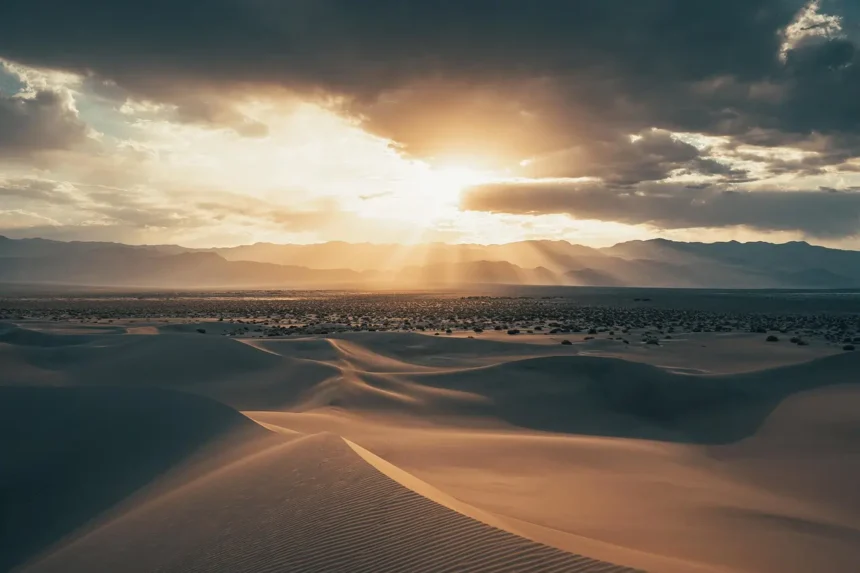
“Thousands have lived without love, but not one without water.” — W. H. Auden
Water shapes civilizations. It builds cities, fuels economies, and determines the survival of entire cultures. Yet today, nearly 2.3 billion people live in places experiencing high water stress — and the number continues to grow.
As global temperatures change and rainfall becomes increasingly unpredictable, we find ourselves asking: How do we secure water in the world’s driest environments? How do nations ensure access when every drop counts? What water supply techniques in dry regions can be implemented?
Introduction
Water scarcity is more than a distant statistic; it’s a reality affecting the American Southwest, the Middle East, sub-Saharan Africa, and several parts of Asia. According to the United Nations, nearly one-quarter of the global population faces “extremely high” water stress. In the U.S., states like Arizona, Nevada, New Mexico, and California continually battle declining groundwater, shrinking river flows, and extreme drought cycles.
So we ask ourselves:
- How do we harvest water when rainfall is unpredictable?
- How do we transform desert landscapes into habitable regions?
- How do we make these solutions scalable, affordable, and sustainable?
In this article, we explore five unique and modern water supply techniques in dry regions, examining how science, innovation, and ancient wisdom converge to solve one of humanity’s most urgent challenges. Along the way, we’ll explore facts, stories, and real-world success models from the U.S. and around the world.
We’ll explore innovative water technologies, learn from historical water engineering wonders, and assess how these methods mitigate water scarcity while supporting communities, agriculture, and ecosystems.
Let’s begin.
Read Also: 10 Deepest Canyons in the World That Will Leave You in Awe
What Makes Dry Regions So Challenging?
Dry regions across the world — from the sweeping Sahara to the sun-baked Mojave Desert — face an intricate web of environmental and human-driven obstacles. When we examine why these landscapes struggle with water scarcity, it becomes clear that several geographic, climatic, and social factors combine to create a perfect storm of challenges.
Understanding these barriers helps us appreciate why water supply techniques in dry regions must be exceptionally innovative, long-lasting, and grounded in science.
- Low annual rainfall: One of the biggest issues is low annual rainfall. Many arid zones receive less than 10 inches of rain per year, and that limited moisture often arrives irregularly. This forces communities and engineers to depend on innovative water technologies that can store, capture, or generate water from alternative sources.
- High evaporation rates: Next, high evaporation rates make the problem even more severe. Even when water is available — from reservoirs, seasonal streams, or shallow aquifers — extreme heat causes rapid evaporation, diminishing already scarce supplies. This creates a constant tug-of-war between natural availability and climatic loss, making water supply techniques in dry regions more complex and demanding.

- Saline or brackish groundwater: Adding to the challenge is saline or brackish groundwater, common in desert ecosystems where mineral content accumulates over centuries. Such water is often unsafe for drinking or farming unless treated, increasing reliance on desalination and other innovative water technologies.
- Limited surface water: Furthermore, dry regions typically have limited surface water. Rivers are seasonal, lakes shrink, and streams frequently run dry.
- Population pressure and agricultural needs: As populations grow and agriculture expands, water scarcity becomes even more pronounced, widening the gap between supply and demand.
Taken together, these factors highlight why effective water supply techniques in dry regions must be adaptable, energy-efficient, and capable of functioning under severe environmental pressure.
In places where every drop matters, solutions must be designed with precision, creativity, and a deep respect for the land’s natural limitations. For these locations, water supply techniques in dry regions must be efficient, energy-aware, environmentally compatible, and adaptable to local conditions.
Read Also: 7000-Year-Old Mummies in the Sahara Desert that Don’t Have DNA Similarities with Modern Man
5 Amazing Water Supply Techniques in Dry Regions
Technique #1: Fog Harvesting Systems
Fog harvesting is one of the oldest yet newest water supply techniques in dry regions, combining ancient intuition with modern engineering.
How Fog Nets Capture Water
Fog harvesting works by capturing microscopic droplets from drifting fog using mesh nets. These droplets stick to the net, gather into larger drops, and trickle down into collection tanks.
Real-World Success Stories
- Morocco’s Anti-Atlas Mountains now host the world’s largest fog-harvesting project, providing nearly 6,300 liters of water per day to rural villages.
- Peru and Chile’s coastal deserts use fog nets to support farming and community drinking-water needs.

Benefits
- Low-energy
- Low maintenance
- Reliable in coastal desert regions
Limitations
- Requires consistent fog conditions
- Best suited for mountainous/coastal dry zones
Read Also: Giants of the Sky: Atmospheric Rivers – Rainfall Heroes or Flood Villains?
Technique #2: Desalination Plants
Desalination transforms seawater or brackish water into freshwater, making it one of the fastest-growing water supply techniques in dry regions globally.
How Desalination Works
Most plants use reverse osmosis (RO), where high pressure forces seawater through membranes that filter out salts and impurities. Today, solar-powered desalination is emerging as part of broader innovative water technologies.
Global Applications
- The UAE and Saudi Arabia produce more than half of the world’s desalinated water.
- Israel fulfills over 85% of its domestic water needs through desalination.
- California’s Carlsbad plant is one of the largest in the Western Hemisphere.
Advantages
- Unlimited source: the ocean
- High purity
- Scalable for cities and industries
Concerns
- Energy-intensive
- Brine disposal challenges
Read Also: Freshwater vs. Saltwater: Do You Know 3 Most Important Distinctions?
Technique #3: Artificial Recharge of Groundwater
Groundwater provides nearly 30% of the world’s freshwater, yet aquifers in many dry regions are depleting at alarming rates.
Artificial recharge — also known as Managed Aquifer Recharge (MAR) — is one of the most effective water supply techniques in dry regions for rebuilding groundwater reserves.
How Managed Aquifer Recharge Works
- Rainwater or stormwater is collected.
- It’s diverted toward recharge basins or pits.
- Water slowly filters downward, replenishing underground aquifers.
Why It Matters
- Supports long-term water security
- Helps stabilize groundwater tables
- Protects against extreme drought cycles
This technique is widely used in Arizona, Australia, and India, showing how global knowledge blends into modern solutions.
Read Also: How is the West Australian Desert Formed?
Technique #4: Traditional and Modern Rainwater Harvesting
Rainwater harvesting is both ancient and modern — a perfect example of how historic wisdom informs innovative water technologies today.
Traditional Methods
- Check dams
- Stepwells
- Underground tanks (kunds in India)
- Terrace catchments

Modern Methods
- Rooftop filtration systems
- Recharge trenches
- Rain gardens
- Smart rainwater monitoring sensors
This is one of the most cost-effective water supply techniques in dry regions, especially for rural communities and small towns.
Read Also: Deadly Waters of the North Sea: Why This Sea Claims Ships, Storms & Coastal Lives
Technique #5: Atmospheric Water Generators (AWGs)
Perhaps the most futuristic of all water supply techniques in dry regions, AWGs pull water directly from the air — even in low-humidity environments.
How AWGs Work
AWGs condense moisture from the atmosphere using one of two methods:
- Cooling-based condensation
- Solar-hydropanel extraction
Where They’re Being Used
- Tribal lands in the American Southwest
- Middle Eastern refugee camps
- Remote African villages
Hydropanels can produce 3–5 liters of drinking water per day per unit without electricity — a breakthrough in combating water scarcity.
Read Also: Unmask the 10 Most Dangerous Tribal Communities in the World
Problems Faced by the Techniques
Even though the five major water supply techniques in dry regions hold enormous potential, each method comes with limitations that influence long-term performance, affordability, and scalability. To understand why communities still struggle with water scarcity, we must examine the real-world problems faced by these systems.
1. Fog Harvesting Systems
- Fog nets require specific microclimates, limiting where they can be installed.
- When winds are too strong or too weak, efficiency drops drastically.
- Maintenance becomes challenging due to mesh clogging from sand, dust, and insects.
- As one of the simpler innovative water technologies, it offers low output, making it insufficient for towns or large agricultural demands.
2. Desalination Plants
- Desalination is one of the most expensive water supply techniques in dry regions, requiring high energy consumption, complex infrastructure, and skilled labor.
- Concentrated brine waste harms marine ecosystems if not properly managed.
- Water distribution from coastal plants to inland regions increases cost and carbon footprint.
- Solar desalination is improving, but scaling these innovative water technologies remains a hurdle.

Read Also: Marine Food Web: 5 Threats to the Backbone of the Oceans
3. Artificial Recharge of Groundwater (MAR)
- MAR depends heavily on seasonal rainfall, which is inconsistent in many arid regions affected by water scarcity.
- Poorly filtered recharge water may contaminate aquifers.
- Land availability for recharge basins is often limited in dense or urban dry zones.
- High initial investment slows adoption despite being one of the most valuable water supply techniques in dry regions.
4. Rainwater Harvesting
- Rainfall unpredictability reduces reliability, especially during multi-year drought cycles.
- Improper storage leads to contamination, mosquito breeding, and material degradation.
- Storage tanks require space and periodic cleaning.
- Although considered accessible and innovative water technologies, they still depend entirely on climatic patterns.
5. Atmospheric Water Generators (AWGs)
- AWGs require stable electricity or strong solar input, making remote installation challenging.
- Efficiency drops drastically in low humidity — a major issue in areas facing severe water scarcity.
- High upfront cost limits community-wide adoption.
- Maintenance of filters and coils adds long-term expenses, impacting their role as reliable water supply techniques in dry regions.
Read Also: Role of solar energy in sustainable development
Table 1: Comparative Study of the 5 Techniques
| Technique | Water Source | Best Regions | Cost | Technology Level | Examples |
|---|---|---|---|---|---|
| Fog Harvesting | Coastal fog | Mountain/coastal deserts | Low | Low–Medium | Morocco, Peru |
| Desalination | Ocean water | Coastal dry regions | High | High | UAE, Israel, California |
| Groundwater Recharge | Rain/stormwater | Seasonal dry regions | Medium | Medium | Arizona, India |
| Rainwater Harvesting | Rainfall | Urban/rural dry regions | Low | Low–Medium | Rajasthan, Texas |
| AWGs | Atmosphere | Remote/arid regions | Medium | High | Arizona, Kenya, UAE |
Table 2: Output Comparison
| Technique | Daily Water Output Potential | Ideal Use Case |
|---|---|---|
| Fog Nets | 2–10 liters per m² | Drinking water in remote villages |
| Desalination | Millions of gallons | City, industrial, agricultural |
| MAR Systems | Seasonal large volumes | Groundwater stabilization |
| Rainwater Harvesting | 5,000–100,000 liters | Homes, farms, institutions |
| AWGs | 3–5 liters per panel | Drinking water for remote households |
Success Stories of Israel and Peru & Morocco
Real-world success stories help us understand how water supply techniques in dry regions make a measurable impact on communities. Two of the most inspiring examples come from Israel and the Morocco–Peru fog-harvesting initiatives. These regions, each battling severe water scarcity, show how science, smart planning, and innovative water technologies can completely reshape daily life.
Case Study 1: Israel’s Desalination Revolution
Israel stands as one of the strongest models of how water supply techniques in dry regions can transform an entire nation. With over half the country covered by desert, Israel once struggled with chronic water scarcity that threatened agriculture, population growth, and national stability.
The shift began when Israel pioneered large-scale desalination using reverse osmosis — a state-of-the-art approach that quickly became a global benchmark in innovative water technologies.
Today, more than 85% of Israel’s domestic drinking water comes from desalination plants along the Mediterranean coast. These facilities provide clean, affordable water not only to households but also to farmlands through highly efficient drip irrigation systems.
Israel’s success story demonstrates that when water supply techniques in dry regions are combined with policy reform and strong research investment, it’s possible to reverse decades of water scarcity and build a sustainable national water economy.
Case Study 2: Fog Harvesting in Morocco and Peru
In stark contrast to Israel’s high-tech approach, the coastal mountains of Morocco and Peru highlight how low-cost water supply techniques in dry regions can also achieve transformative outcomes. Communities in the Anti-Atlas Mountains of Morocco and the arid coastal deserts of Peru suffer from extreme water scarcity, with traditional wells often running dry.

By installing fine-mesh fog nets — an elegant example of innovative water technologies — villagers began capturing moisture directly from heavy coastal fog. Some Moroccan sites now generate 6,300 liters of clean water per day, enough to supply families who previously walked miles for water. In Peru, fog harvesting supports farming, reforestation, and daily consumption.
Both case studies illustrate that water supply techniques in dry regions succeed when adapted to local climate, resources, and community needs.
Conclusion
As we evaluate the world’s driest landscapes — from the American Southwest to the Sahara — it’s clear that solving water scarcity demands creativity, science, and the courage to learn from both tradition and modern innovation.
These five water supply techniques in dry regions remind us that human ingenuity thrives under pressure. From fog nets catching droplets along mountain ridges to desalination plants transforming oceans into freshwater, each method represents our collective ability to adapt, innovate, and ensure a more secure future.
While no single approach can solve the global water challenge alone, combining innovative water technologies, traditional methods, and regional strategies gives communities the power to shape their own destiny.
Key Takeaway:
The future of water security lies in hybrid solutions. When ancient wisdom meets modern engineering, dry regions can become thriving landscapes where communities flourish — one drop at a time.
FAQs
1. How effective are fog harvesting systems in extremely dry climates?
Fog harvesting works best in coastal deserts with consistent fog patterns, capturing moisture that would otherwise evaporate and providing low-cost drinking water.
2. Are atmospheric water generators reliable during droughts?
Yes, AWGs operate independently of rainfall by pulling moisture from the air, though efficiency varies depending on humidity levels and temperature.
3. Can desalination become affordable for rural communities?
Desalination is currently expensive, but new solar-powered models are reducing energy costs and making it more accessible over time.
4. Is groundwater recharge safe for drinking water?
Yes, if properly filtered. MAR systems use natural soil layers to remove impurities while rebuilding underground water reserves.
5. Why is rainwater harvesting still widely used?
Rainwater harvesting remains popular because it’s low-cost, scalable, easy to maintain, and suitable for both households and large institutions.