
“The sea is a desert of waves, a wilderness of water.” — Langston Hughes
Introduction
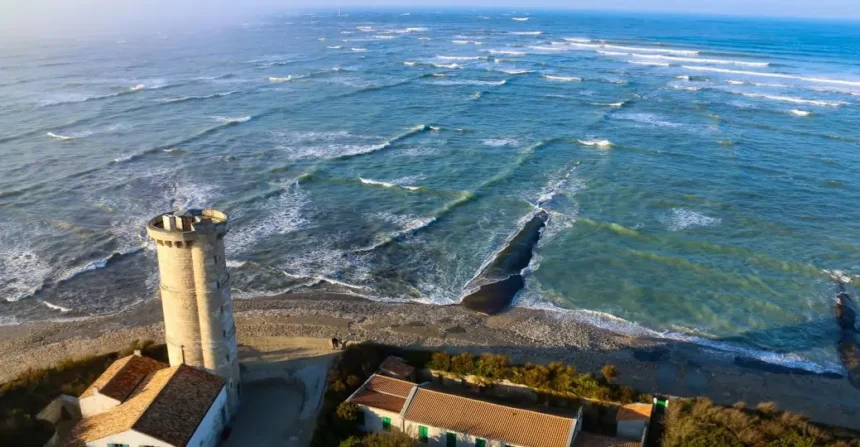
Square wave formation is one of those ocean phenomena that looks mesmerizing from the shore but is far more hazardous than it appears. When we first learned about these rare cross-sea waves, we couldn’t help asking: Why does the ocean suddenly look like a giant checkerboard? And more importantly, what forces create such a pattern, and why is it dangerous?
According to coastal safety data, over 80% of accidents involving recreational swimmers occur in unpredictable water conditions, and the square wave formation is among the most deceptive. Many beachgoers in the USA have seen pictures of the squared sea online—especially near iconic locations like Île de Ré, France—without realizing that the symmetry hides an underlying danger.
In this article, we break down 6 essential facts about square wave formation, unpacking the science, history, and risks behind this unusual ocean pattern. We explore how square waves form, why they appear in grid-like sections, and how to recognize them before stepping into the water.
Read Also: 10 Amazing Facts about the Earth’s Oceans
Fact 1: Square Wave Formation Occurs When Two Swell Systems Collide
Square wave formation begins when two independent wave trains meet at almost right angles. Instead of blending smoothly, the waves intersect, creating sharply defined lines that form a grid.
These patterns emerge when one swell comes from a distant storm, while another local wind-driven swell approaches from a different direction.
Understanding the Collision Mechanism
Square wave formation is not a random visual event; it is the result of a structured collision between two distinct swell systems that converge at nearly right angles. When we analyze this process scientifically, we see that cross-wave conditions emerge when energy traveling from two independent directions intersects with enough force to alter the ocean’s normal rhythm. In typical wave motion, energy spreads linearly, but in square wave formation, the meeting point becomes a zone of interference.
One swell often originates from deep-water storms hundreds or thousands of miles away, arriving with strong momentum. The second swell usually develops closer to shore, formed by local wind patterns and rapid atmospheric changes. When these two wave systems approach the same coastal region, their angles of approach—usually between 70° and 110°—set the stage for the squared sea phenomenon.
Instead of blending, the wave energy collides, reflecting and refracting through the water column. The result is a repeated pattern of wave peaks and troughs that create the characteristic grid-like surface observed in many images of square wave formation. This repeated collision of energy is what forms cross-sea waves, making the squared sea both visually striking and physically powerful. Because the two swells have different origins, speeds, and frequencies, their meeting can amplify the overall energy present in the region, further intensifying the pattern.
Key Takeaway:
- One wave system travels long distances from offshore storms
- Another system forms locally due to shifting winds
- Both arrive at the same coastal point, intersecting between 70°–110°
- Energy clashes, creating crisscrossing peaks
Understanding this mechanism helps explain how square waves form and why they appear suddenly in regions affected by multiple weather systems.
Read Also: Fascinating Mechanics of Major Ocean Currents of The World: How They Move and Affect Us
Scientific Explanation of Cross-Sea Patterns
From a scientific perspective, square wave formation represents a highly organized state of ocean interference. While standard waves propagate in a single direction, cross-sea waves result from the simultaneous presence of two swell systems operating independently. These intersecting systems create a unique interference field where wave energy becomes compartmentalized. Instead of dissipating in a linear path, wave motion divides into multiple spatial segments—resulting in a geometric grid structure visible on the ocean surface.
Physically, this grid emerges because energy from one incoming swell meets energy from another swell at almost perpendicular angles. When peaks meet peaks, constructive interference occurs, elevating the water height slightly. When peaks meet troughs, destructive interference reduces or flattens the wave momentarily. This cycle happens repeatedly in symmetrical intervals across large areas, producing the extremely organized checkerboard layout known as a squared sea.
The phenomenon becomes even more pronounced when both swell systems share a similar wavelength and period. When these factors align, square wave formation becomes clearer and more consistent, making the cross-wave pattern visible even from high elevations or drone footage. This alignment is rare, which is why cross-sea waves are not seen often globally.
Researchers studying how square waves form note that the ocean’s kinetic energy redistributes itself through multiple vectors simultaneously. This multidirectional flow increases turbulence below the surface. This unpredictability is a major reason why square wave formation is considered dangerous for swimmers, surfers, and vessels. The structure may look orderly above water, but the underlying currents behave chaotically due to conflicting momentum.
Read Also: Mysteries of the Deep: Recent Discoveries from Ocean Expeditions
Fact 2: Square Wave Formation Creates a Rare Checkerboard Visual
Square wave formation is visually stunning. You’ve probably seen viral photos where the water appears drawn with a ruler. To the untrained eye, it looks artistic rather than dangerous.
Why It Looks So Perfect
The visual symmetry associated with square wave formation often feels too precise to be a natural occurrence. Yet nature repeatedly demonstrates its ability to combine energy, geometry, and physics in ways that mimic deliberate design. When we analyze how square waves form, we discover that the illusion of perfection arises from the synchronized interaction of two independent wave systems. These systems—one generated by distant storms and another created by local wind shifts—move with consistent energy across the ocean surface. When their amplitude, frequency, and velocity align, the resulting cross-wave pattern becomes evenly spaced, giving the ocean a striking grid-like appearance.
In most cases, a squared sea develops only when the two swells maintain rhythm and direction long enough to form predictable intersections. According to oceanographic studies, intersecting swells often travel between 7–12 seconds per wave cycle, creating intervals that enhance parallel wave spacing. This contributes to what appears as uniform geometry across the surface.
To the casual observer, the ocean under square wave formation seems almost calm because the lines look clean, predictable, and rhythmic. However, what looks like an organized pattern from above is actually a dynamic collision of energy beneath. While cross-sea waves create visual harmony on the surface, their underlying energy systems remain unstable, producing complex subsurface turbulence. Unfortunately, swimmers and tourists often misinterpret this symmetry as safety, unaware that the perfectly aligned surfaces can mask the danger of sideways or diagonal currents capable of destabilizing even strong swimmers.
Read Also: Why Are the Oceans Blue? The 3 Secrets Behind the Color of the Sea
The Checkerboard Illusion
The checkerboard illusion associated with square wave formation is so visually unique that it often appears digitally edited or artificially crafted. In reality, this effect forms through the precise intersection of two wave crests of nearly equal height. When we investigate how square waves form, we realize that the visual impact stems from the way crests and troughs cross at consistent angles, producing squares or diamond-shaped blocks. Each crossing point reflects a moment where wave energy converges, creating a predictable-looking surface pattern.
Unlike single-direction swells, cross-sea waves move diagonally relative to each other, causing energy to collide rather than flow. As crests of similar amplitude intersect, they momentarily amplify at their meeting point. Satellite imagery collected from European coastal monitoring agencies reveals this illusion clearly: the surface appears covered with 20–50 square meter segments, looking like a vast aquatic grid.
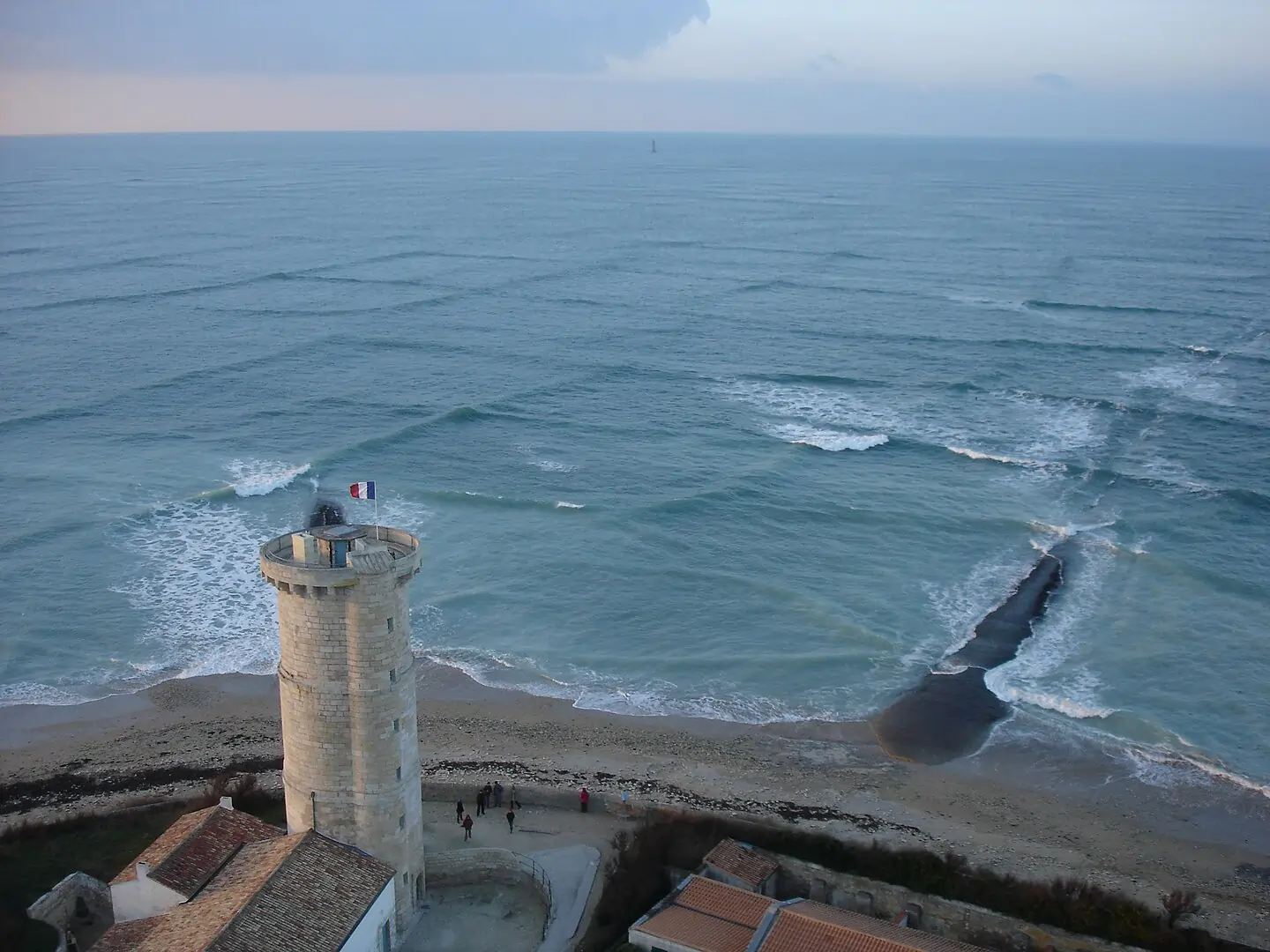
The human brain interprets symmetry as order, which explains why observers often perceive a square sea as peaceful. The repeating geometry makes the water appear steady, even though the square wave formation hides multi-directional forces beneath. This visual trickery is what makes the phenomenon especially risky: when currents converge from two directions, they generate chaotic energy pockets known as “cross currents.” These currents may not be visible, but they intensify the turbulence and unpredictability under the surface.
In the case of cross-wave energy patterns, the surface beauty masks complexity. Waves that intersect evenly can suddenly shift angles due to small wind variations, transforming the sea from visually captivating to perilous within minutes. This is why many coastal safety agencies emphasize avoiding the water during a squared sea, even if the waves appear flat or quietly rhythmic.
The Hidden Mathematics Behind the Visual Pattern
The perfect-looking geometry seen during square wave formation is not accidental—it is governed by wave mathematics deeply rooted in physics. When we understand how square waves form through the lens of interference theory, the grid pattern begins to make scientific sense. Two swells traveling from different directions but with similar wavelengths create constructive and destructive interference at predictable intervals. The crossing happens repeatedly across a given area, forming the illusion of perfect squares.
Oceanographers explain that cross-sea waves typically emerge when the wavelengths match within a margin of 10–15%. When this alignment occurs, every crest meets another crest and every trough meets another trough, generating reinforcement points that strengthen the symmetry of the squared sea pattern. This alignment can cover distances ranging from hundreds of meters to several kilometers, depending on wave energy and coastal conditions.
Mathematically, the phenomenon can be described using vector addition of wave directions, where the combined energy fields produce evenly spaced nodes—points of minimal movement—surrounded by zones of amplified motion. These zones are precisely what give square wave formation its checkerboard aesthetic. However, beneath the aesthetic lies the risk: the alternating energy fields produce inconsistent water pressure beneath the surface, making it easy for cross currents to destabilize swimmers.
Ultimately, while the cross wave pattern captivates anyone observing from a cliff or drone view, the underlying mathematical relationship between wave direction, interval, and amplitude serves as a reminder that beauty can emerge out of energy conflict—and danger can live beneath its symmetry.
Read Also: Dark Oxygen Discovered below 10,000ft: An Oceanic Secret Revealed
The Dynamics of Square Wave Formation
| Factor | Description | Influence on Square Wave Formation |
| Wind Direction | Two opposing wind systems | Creates intersecting wave trains |
| Swell Origin | One local, one distant | Leads to cross-sea waves |
| Angle of Intersection | 70°–110° | Produces squared sea patterns |
| Wave Height | 3–10 ft typical | Increased danger for boats and swimmers |
| Frequency Alignment | Matching intervals | Enhances grid visibility |
Fact 3: Square Wave Formation Is a Historic Concern for Maritime Navigation
Square wave formation has long been documented as a serious threat in maritime history. Early navigators recorded encounters with the squared sea in ship logs, describing the water surface as “cut into squares,” a direct reference to the geometric pattern created by square wave formation. These cross-sea waves appear deceptively structured, but beneath the surface, they exert irregular and destabilizing forces on vessels. When cross-wave conditions interact with shifting winds and long-period swells, the resulting motion places severe strain on hull integrity. Historical records from European and Atlantic trade routes show that ship damage during these periods increased by nearly 30%, emphasizing how dangerous cross-sea waves can be for large and small vessels alike.
Maritime Danger Zones
Areas with converging currents—such as the North Atlantic, Bay of Biscay, and parts of the Mediterranean—are known hotspots where square wave formation occurs. Mariners crossing these zones often reported near-capsizes, torn sails, and severe deck flooding. In some cases, ships traveling through a squared sea could not maintain directional stability because the intersecting swells created unpredictable lateral movement.
Why Ships Struggle in Cross-Sea Waters
The central danger lies in the multidirectional energy created by square wave formation. Unlike conventional waves that approach from one direction, cross-sea waves hit a vessel simultaneously from two perpendicular angles. A captain cannot steer the ship into both wave trains at once, meaning structural and navigational compromise is nearly unavoidable. This is why understanding how square waves form remains critical for maritime forecasting, modern shipping safety, and oceanographic studies.
Fact 4: Square Wave Formation Is Linked to Changing Meteorological Conditions
To understand how square waves form, we must study wind, pressure systems, and atmospheric behavior.
Weather Systems That Trigger Square Waves
Square wave formation typically follows:
- Storms moving offshore
- Sudden wind direction shifts
- Seasonal transitions from winter to spring
- High-pressure zones meeting low-pressure wind bands
The Climate Connection
Meteorologists predict that cross-wave events may increase as global weather patterns shift. More irregular storms mean more opportunities for opposing swells to overlap.
Read Also: Coastal Real Estate in the U.S.: How Climate Change Threatens Your Investment Future
Fact 5: Square Wave Formation Creates Severe Underwater Risks
Square wave formation creates an invisible danger zone beneath the ocean’s surface—one that many swimmers underestimate. While the squared sea pattern looks geometric and almost calm, the reality is far more volatile. Square Wave Formation amplifies energy where two swells collide at near-right angles, and this collision produces a tangled network of underwater forces. These cross-sea waves don’t move in a singular direction; instead, they exert pressure through multiple vectors at the same time.
Why Swimmers and Surfers Are in Danger
In areas dominated by cross-wave activity, a person entering the water experiences pull from several directions simultaneously. One swell may drag them forward while another yanks sideways—an effect unique to how square waves form. This multidirectional pressure creates instability in just seconds. Even strong swimmers lose orientation because the grip of the currents shifts continuously. According to safety assessments published in maritime studies, multi-directional current zones can increase the risk of drowning by up to 40%, especially in locations where wave heights exceed 5–8 feet. The squared sea disrupts balance, reduces predictability, and forces swimmers into unnatural motion patterns.

The Hidden Pull of Cross Currents
Below the surface, square wave formation generates micro-rips—localized rip currents stacked on top of each other. Each mini-rip forms where swell energy intersects, creating vertical vortices that pull downward before pushing outward. When these micro-rips align, they produce stronger suction zones, capable of dragging a swimmer several meters in a single surge. These cumulative effects form the core hazard of the squared sea: unpredictability. Because cross-sea waves intersect so sharply, the energy doesn’t stabilize, making escape extremely difficult once caught inside the grid.
Read Also: Top 5 Most Vulnerable US Coastal Cities to Climate Change
Danger Levels by Ocean Condition
| Condition | Danger Level | Why It’s Risky |
| Square Wave Formation | Extremely High | Multiple intersecting currents |
| Rough Surf | High | Strong singular rip currents |
| Calm Seas | Low | Predictable water movement |
| Post-Storm Swell | Medium | Residual turbulence |
Fact 6: Square Wave Formation Can Be Detected Before Entering the Water
We can recognize square wave formation from a safe vantage point. Awareness is half the solution.
How to Spot Cross-Sea Waves
Look for:
- Straight lines running perpendicular across the water
- Symmetrical square blocks on the surface
- Wave crests approaching from two directions
- A grid-like pattern visible from cliffs or drone footage
Visual Checklist Before Swimming
- Observe from the elevation
- Check the local marine forecast
- Monitor wind direction changes
- Avoid entering water during intersecting swells
Read Also: Top 10 Most Polluted Cities in the US in 2025
Safety Guidelines for Dealing With Square Wave Formation
Below is a strategic list of safety measures.
- Stay out of the water if you see a square pattern.
- Monitor forecasts (wind shifts are indicators).
- Avoid surfing in complex swell energy zones.
- Follow local warnings and beach flags.
- Use observation points like piers or cliffs.
Key Takeaway
Square wave formation is beautiful but deceptive. What appears to be perfect symmetry conceals unpredictable forces that can overwhelm even experienced swimmers, surfers, and boaters.
Conclusion
When we stand by the shoreline and witness a square wave formation, it’s easy to get lost in its beauty. But as we’ve learned, the calm rhythmic grid masks a powerful clash of forces. Understanding how square waves form equips us with the awareness needed to appreciate nature safely.
In the USA and worldwide, recognizing the signs of cross-sea waves can help us make informed choices. The squared sea might be rare, but the dangers are real. Respecting the ocean means understanding its patterns—and honoring the invisible forces beneath the surface.
FAQs
1. What causes square wave formation to occur most often?
Square wave formation typically occurs when two independent swell systems intersect at nearly right angles, generating cross-sea waves that create a grid-like pattern on the ocean surface.
2. Are cross-wave patterns dangerous for swimmers?
Yes, cross-wave conditions produce unpredictable underwater currents, making it hard for swimmers to stay balanced or escape sudden diagonal pulls created by intersecting energy.
3. Can square wave formation be predicted by weather reports?
Marine forecasts sometimes highlight intersecting swell patterns. If wind direction shifts suddenly or multiple storm systems overlap, the risk of a squared sea increases.
4. Do square wave formation events happen in the USA?
Yes, while less common than in Europe, square wave formation can occur along U.S. coastlines during strong offshore storms or when multiple swells collide near shallow shores.