
⫸ Introduction to Penguins
Penguins are some of the most fascinating and beloved birds on Earth. With their tuxedo-like appearance and adorable waddle, they capture hearts worldwide. But what exactly makes a penguin a penguin, and what sets them apart in the animal world? Let’s dive in!
What are penguins?
Penguins are flightless, aquatic birds belonging to the family Spheniscidae. Their streamlined bodies and powerful flippers make them exceptional swimmers and divers, perfectly adapted to life in the ocean.
Unique characteristics of penguins
Penguins boast several distinct features:
- Black and white “tuxedo”: This countershading camouflage helps them blend in with the ocean from above and below.
- Counter-shaded camouflage: Their black backs and white bellies help them blend into the water from both above and below, protecting them from predators.
- Dense feathers and blubber: Insulation for surviving frigid temperatures.
- Streamlined bodies: Built for speed and agility underwater.
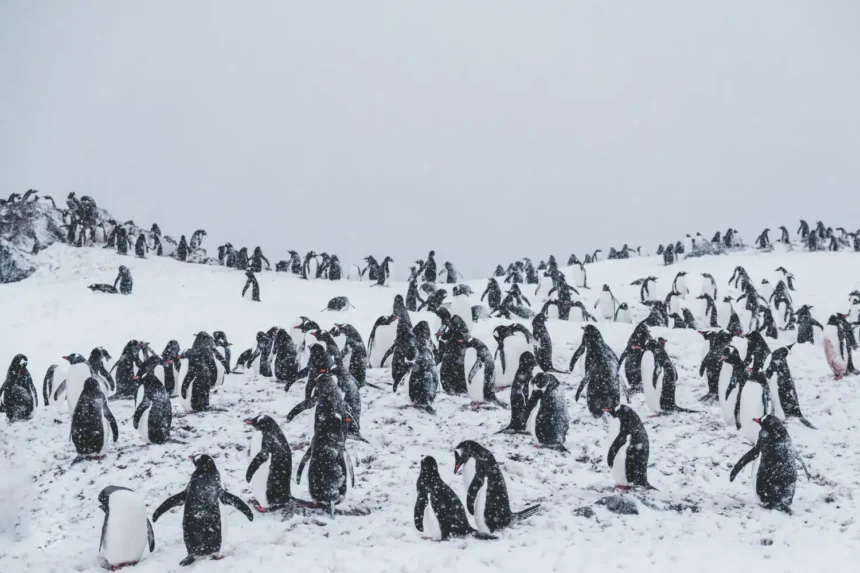
- Social nature: Most penguin species live in large, bustling colonies.
Penguins' place in the animal kingdom
Penguins are part of the class Aves (birds). Despite their inability to fly, all types of penguins share common traits with their flying relatives like feathers, egg-laying, and warm-bloodedness. Their closest living relatives are likely albatrosses and petrels.
⫸ Where in the World Do Penguins Live?
Penguins are especially fascinating because of their unique habitats. Though we often picture them in icy landscapes, their range extends beyond the frozen South. Let’s explore where different types of penguins call home.
The Southern Hemisphere Dominance
Major types of penguins are exclusively found in the Southern Hemisphere. This means you won’t find any wild penguins hanging out in the Arctic with the polar bears! Most penguin species thrive in cold waters from Antarctica to the coasts of South America, Africa, Australia, and New Zealand.
● Penguins in Antarctica
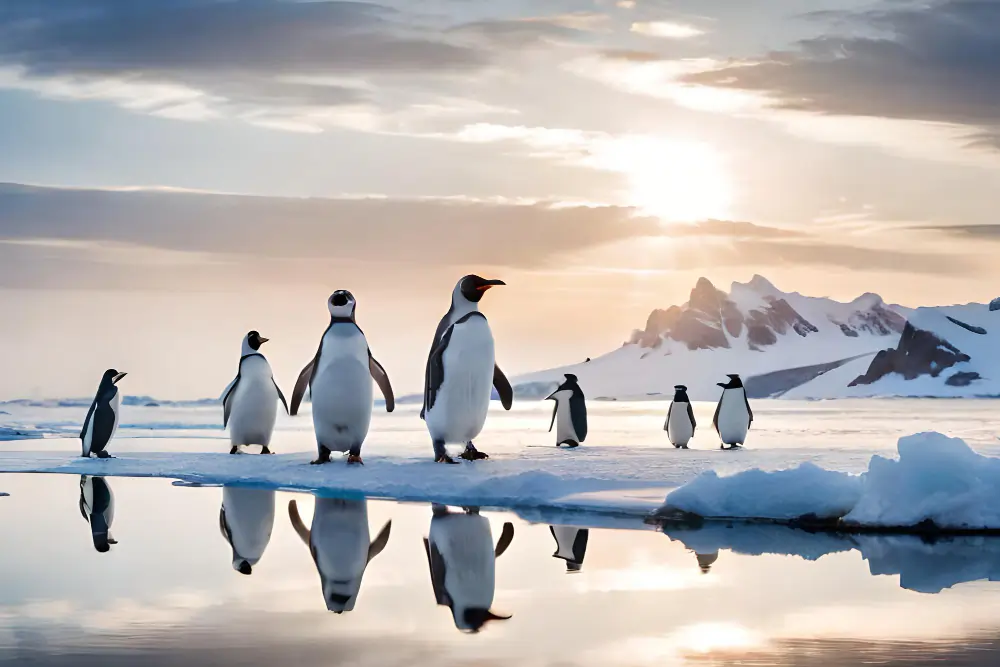
Antarctica is the penguin stronghold! Only two types of penguins, the Emperor Penguin and the Adélie Penguin, live there year-round. Other types of penguins, like the Chinstrap and Gentoo, breed on the islands around Antarctica.
Galápagos Penguins: The Exception
The Galápagos Penguin breaks the mould! These fascinating birds live on the Galápagos Islands on the equator. They manage the tropical heat thanks to cool ocean currents and adaptations for staying cool.
Habitats: Coastlines, Islands, and Antarctica
Major types of penguins favor coastal areas and islands, needing easy access to the ocean for food but safe nesting spots on land. Some, like the Emperor Penguin, venture onto the Antarctic ice, while others prefer milder coastal climates.
⫸ Types of Penguins
Large Penguins
These majestic birds are the giants of the penguin world, known for their size and impressive appearances.
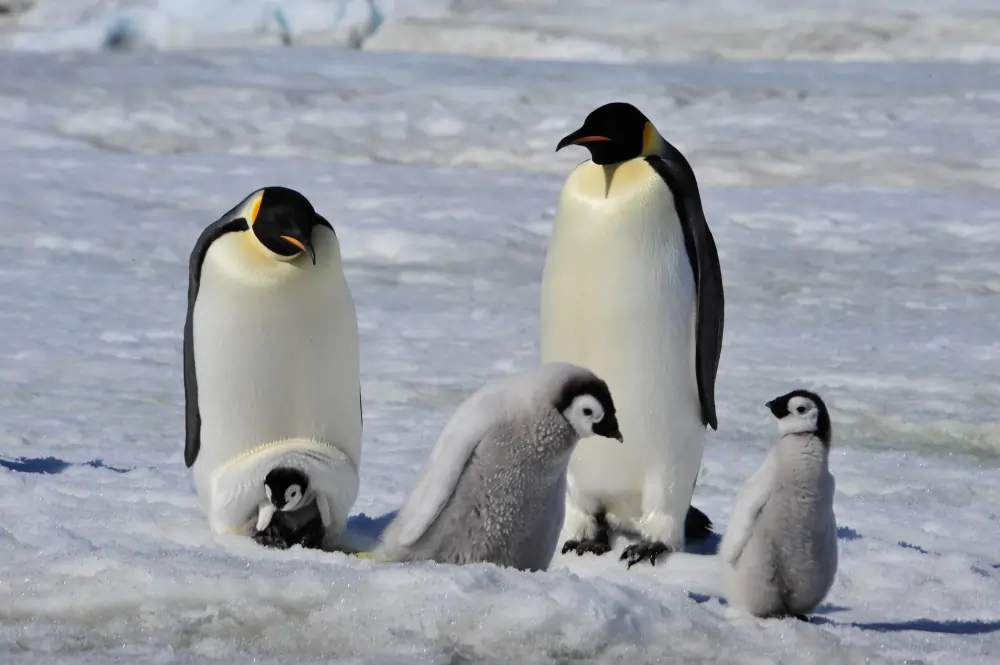
● Emperor Penguin
- Size: Largest among different types of penguins, up to 4 feet tall and 90 pounds.
- Appearance: Classic black and white plumage with a splash of yellow-orange on the neck.
- Habitat: The icy heart of Antarctica, breeding on sea ice.
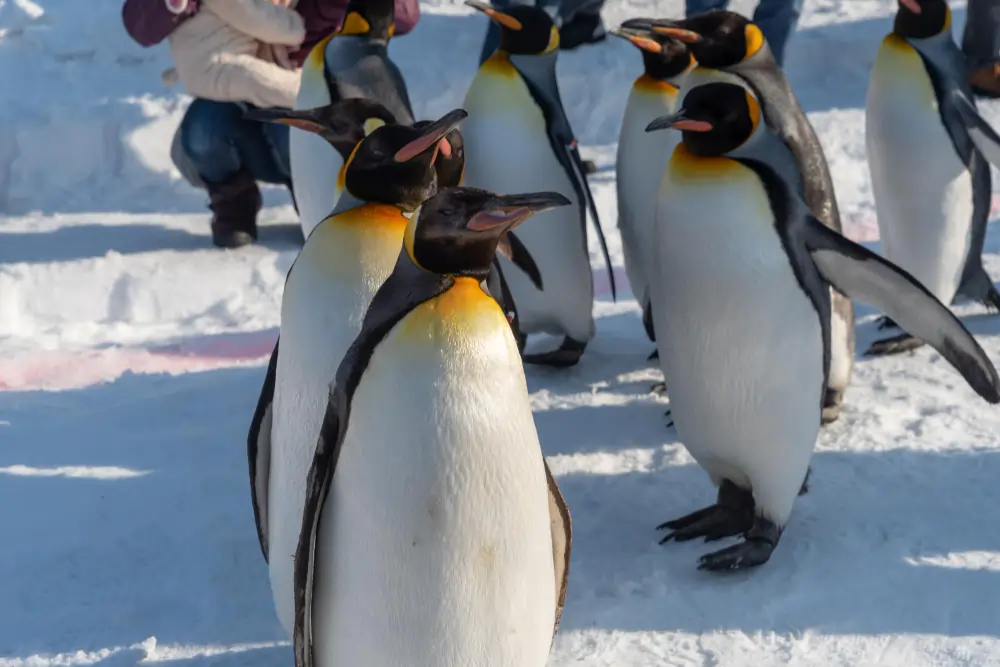
● King Penguin
- Size: Second largest among all types of penguins, up to 3 feet tall.
- Appearance: Similar to Emperor Penguins but with brighter orange markings on the neck and chest.
- Habitat: Sub-Antarctic islands with milder climates than Emperor Penguins.
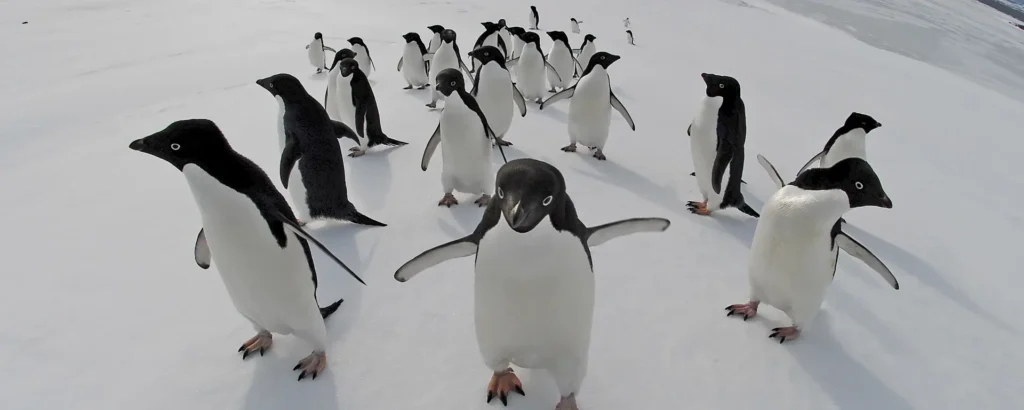
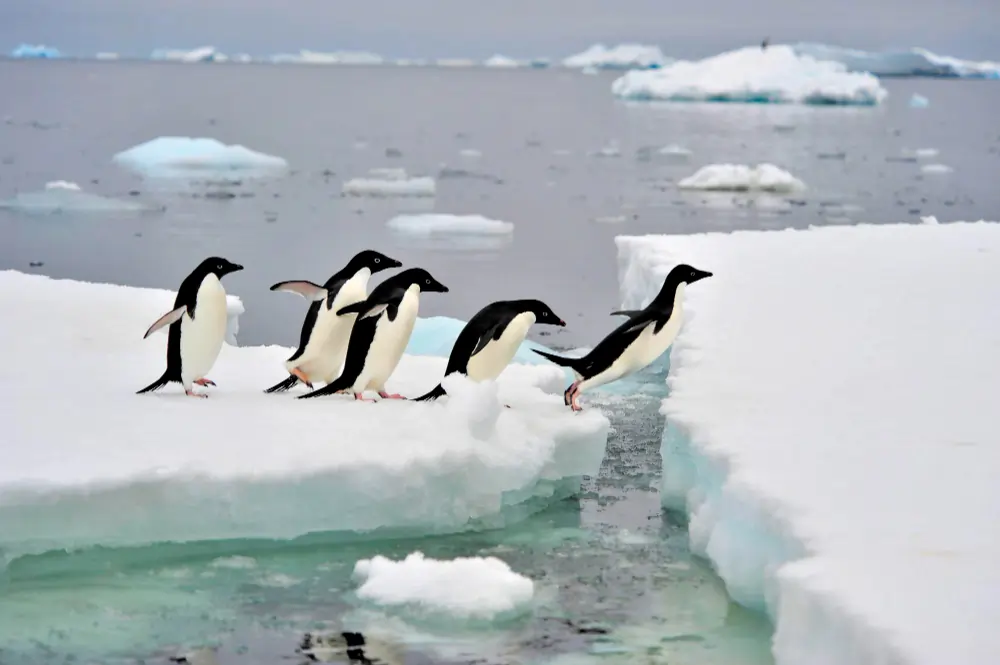
Adélie Penguin
- Size: Medium-sized penguin, around 28 inches tall.
- Appearance: Black and white with a distinctive white ring around their eyes.
- Habitat: Coastal regions of Antarctica and surrounding islands.
Crested Penguins
Get ready to meet the rock stars of the penguin world – crested penguins! These charismatic birds sport flamboyant, spiky crests of yellow or orange feathers, making them some of the most recognizable species. Let’s explore two of the most iconic members of this group:
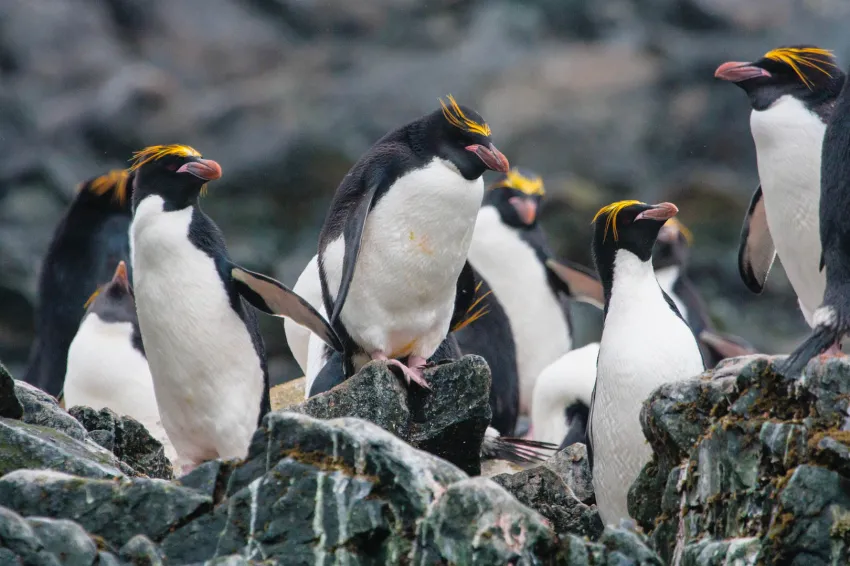
● Macaroni Penguin
- Scientific Name: Eudyptes chrysolophus
- Size: Around 70 cm tall, weighing about 5 kg
- Appearance: Black back, white belly, and their showstopping golden-yellow crest extending above their eyes.
- Habitat: Sub-Antarctic islands and the Antarctic Peninsula’s colder waters.
- Unique Crest: The macaroni penguin’s elaborate crest is the largest among crested penguins. The Macaroni’s impressive crest gives them their name, referencing fashionable young men known as “Macaronis” in 18th-century England.
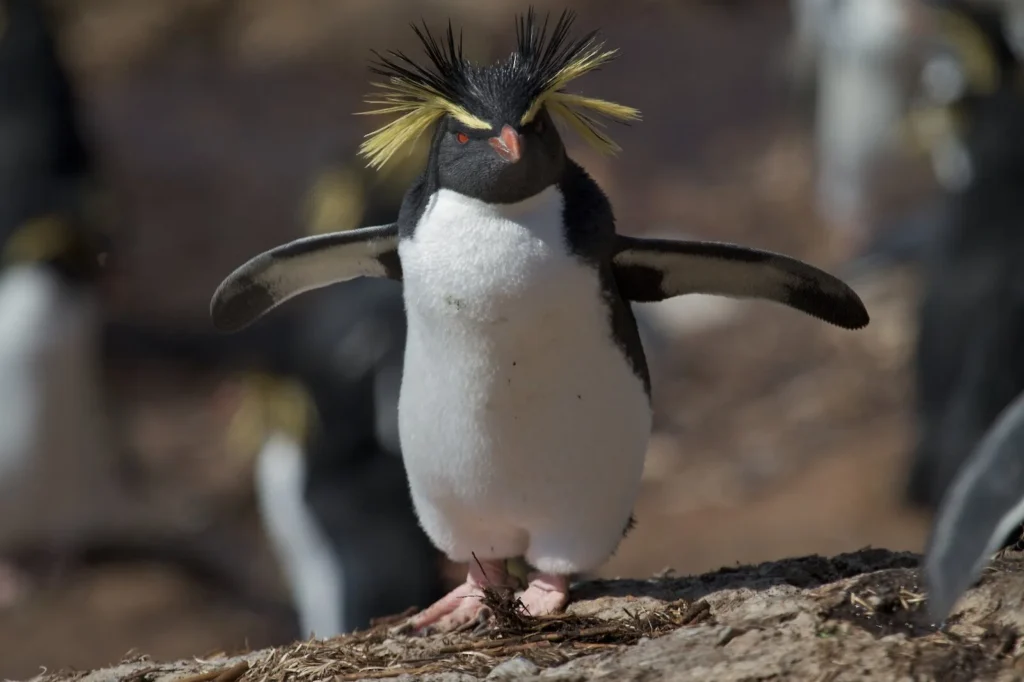
● Rockhopper Penguins
- Northern Rockhopper: Eudyptes moseleyi
- Southern Rockhopper: Eudyptes chrysocome
- Eastern Rockhopper: Eudyptes filholi
- Size: Smallest of the crested penguins, around 55 cm tall.
- Appearance: Similar to Macaronis but smaller, with bright red eyes and spiky yellow-black crests.
- Habitat: Sub-Antarctic islands with rocky coastlines, they are known for hopping across boulders rather than waddling.
- Unique Crests: Their crests are less bushy than the Macaroni’s, with spikier feathers above the eyes. Their wild, spiky crests give them their “rockhopper” name and a rebellious look. They hop, rather than waddle, using powerful legs to navigate rocky terrain.
Banded Penguins
Banded penguins get their name from the distinctive stripes or bands of black feathers adorn their bodies. These striking markings make them easy to identify within the diverse types of penguins. Let’s explore four fascinating types of penguins that sport this banded look.
● African Penguins
- Scientific Name: Spheniscus demersus
- Size: About 60-70 cm tall, weighing 2.2-3.5 kg
- Appearance: They are black and white, with a black band across the chest and black spots on their belly. A pink fleshy gland above their eye helps with thermoregulation.
- Habitat: Coastlines and islands of southern Africa.
- Unique Banding: The pattern of spots on their belly is unique to each individual!
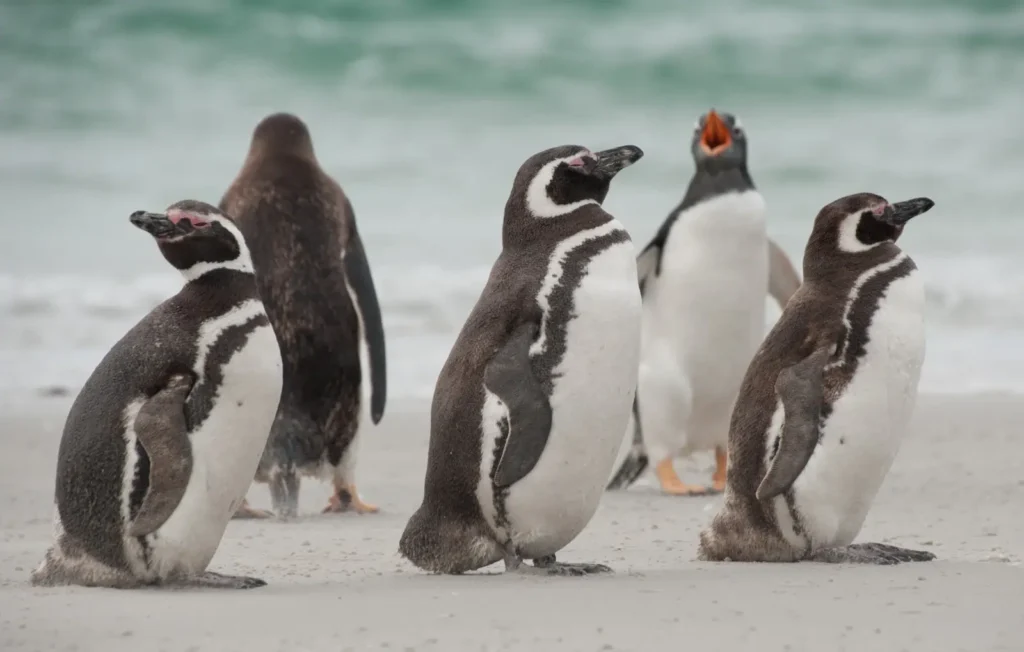
● Magellanic Penguins
- Scientific Name: Spheniscus magellanicus
- Size: 61-76 cm tall, weighing around 4.5 kg.
- Appearance: Black and white with two black bands across the chest and a broader stripe below.
- Habitat: Coasts of Argentina, Chile, and the Falkland Islands, migrating up to Brazil.
- Unique Banding: A white stripe extends over the eye and around the back of the head.
● Humboldt Penguins
- Scientific Name: Spheniscus humboldti
- Size: 65-70 cm tall, weighing around 4 kg
- Appearance: It is black and white with a single black chest band. The beak has pink fleshy skin at the base.
- Habitat: Coasts of Peru and Chile.
- Unique Banding: Extends up towards the head but doesn’t go behind the eye.
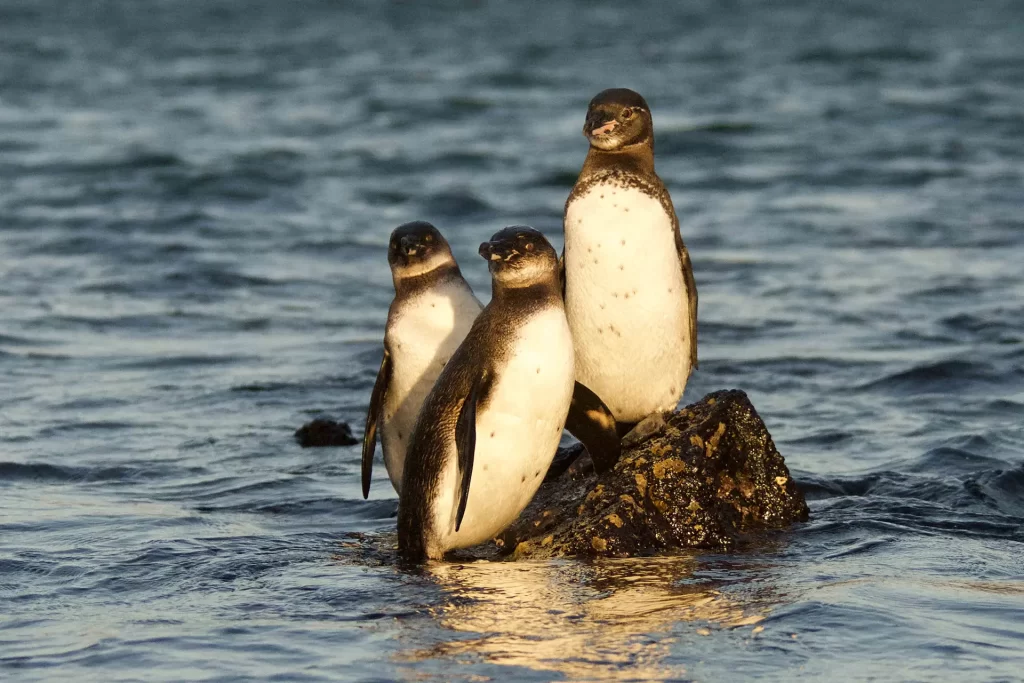
● Galápagos Penguin
- Scientific Name: Spheniscus mendiculus
- Size: Approx. 50cm tall, weighing around 2.5 kg
- Habitat: Galápagos Islands, making it the only penguin living north of the equator.
- Appearance: It is black and white, with a thin single chest band and a U-shaped line extending from behind the eye around the face.
Little Penguins
Little penguins stand out for their miniature stature and charming personalities within the varied types of penguins. These pint-sized birds offer a unique glimpse into the fascinating types of penguins.
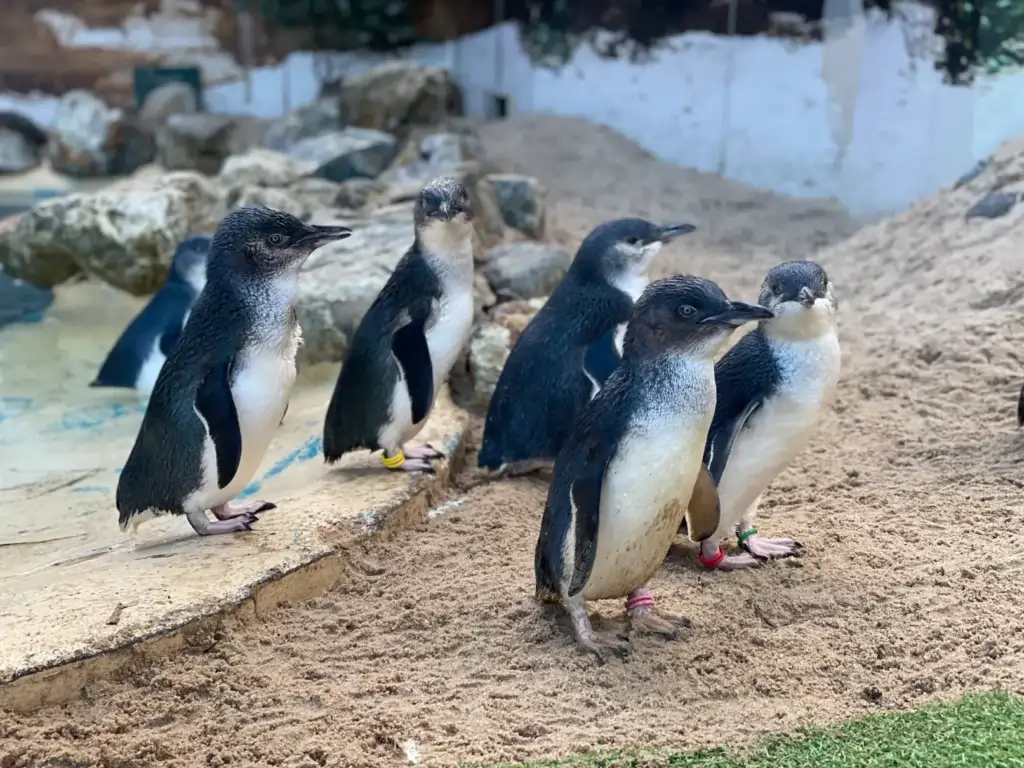
● Little Blue Penguin
- Scientific Name: Eudyptula minor
- Size: The smallest of all penguin species, adults average around 33 cm (13 inches) tall and weigh about 1 kg (2.2 lbs).
- Appearance: Distinctive slate-blue to indigo plumage with a white belly.
- Habitat: Coastlines of southern Australia and New Zealand, including offshore islands.
● White-Flippered Penguin
- Scientific Name: Eudyptula minor albosignata
- Size: Slightly larger than their Little Blue cousins, reaching approximately 30cm (12 in) tall and weighing up to 1.5 kg (3.3 lbs).
- Appearance: Share the blue-grey and white coloration but with distinctive white edges on their flippers.
- Habitat: Restricted to the Canterbury region of New Zealand’s South Island.
⫸ Penguin Threats and Conservation
Sadly, the captivating world of all types of penguins faces serious threats that endanger their populations. Understanding these challenges is crucial for developing effective conservation strategies to protect these beloved birds.
Challenges faced by penguins
● Climate change and habitat loss
Due to rising temperatures and the resultant melting sea ice, climate change disrupts penguin habitats, making it harder for them to find food and raise chicks. Changes in ocean currents also affect the distribution of their prey.
● Overfishing and prey depletion
Industrial fishing depletes the krill, fish, and squid that penguins rely on for survival. This competition for food resources puts immense pressure on penguin populations.
● Pollution and entanglement
Oil spills, plastic debris, and discarded fishing gear directly threaten penguins. They can become entangled, ingest harmful substances, or suffer injuries that can lead to death.
Conservation Efforts
● Protecting penguin habitats
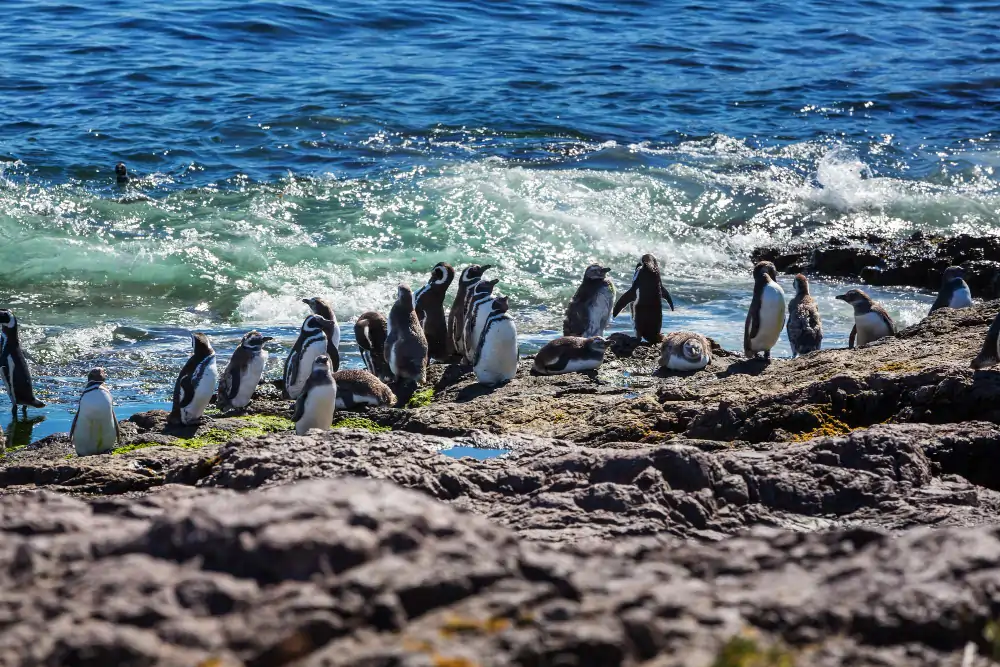
Establishing marine protected areas and limiting human activity in key penguin breeding grounds is essential for safeguarding their homes.
● Sustainable fishing practices
Implementing strict fishing quotas, reducing bycatch, and promoting responsible fishing methods help lessen the impact on penguin food sources.
● Reducing pollution
Tackling plastic waste, preventing oil spills, and enforcing stricter environmental regulations are crucial to protecting penguin habitats from contamination and pollution.
⫸ Fascinating Penguin Facts
Beyond their charming appearances, all types of penguins are remarkably well-equipped for their environments and lead complex social lives. Let’s explore some of the most fascinating facts about these captivating birds.
Penguin Adaptations
● Diving and swimming abilities
- Penguins are built for the water. Their sleek bodies and powerful flippers allow them to reach impressive underwater speeds.
- Some species, like the Emperor penguin, can dive hundreds of meters and hold their breath for extended periods in search of food.
● Staying warm in cold climates
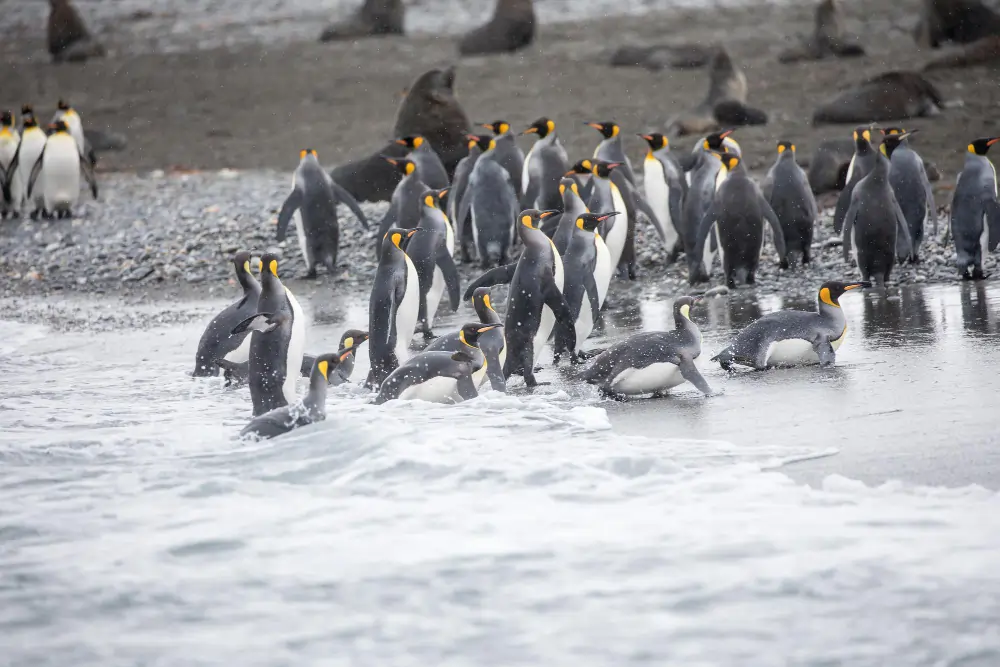
- Dense, waterproof feathers trap a layer of air for insulation.
- A thick layer of blubber provides further warmth.
- Penguins huddle together in colonies, reducing heat loss for individuals.
Social Behavior and Colonies
● Courtship rituals
Many penguin species have elaborate courtship rituals involving vocalizations, nest building, and even presenting “gifts” like pebbles to potential mates.
● Nesting and chick-rearing
- Penguin colonies can be incredibly large and dense.
- Nest types vary from simple scrapes to pebble nests or burrows.
- Both parents often share the duties of incubating eggs and feeding hungry chicks.
⫸ Conclusion
With their fascinating adaptations and endearing appearances, all types of penguins hold a special place in our hearts. But beyond their charm, they play a crucial role in maintaining healthy marine ecosystems. As predators and prey, they are key links in the food web. Sadly, many species of penguins face threats that put their survival in danger.
The importance of penguins in the ecosystem
- Food Web Balance: Penguins help regulate fish and krill populations, keeping the food web in check.
- Nutrient Cycling: Penguin guano (poop!) fertilizes coastal areas, supporting plant and animal life.
How you can help protect penguins?
- Support Sustainable Choices: Choose seafood from responsibly managed fisheries.
- Reduce Plastic Pollution: Opt for reusable items and dispose of waste correctly.
- Advocate for Conservation: Support organizations working to protect penguins and their habitats.
Let’s all do our part to ensure that these captivating creatures and the diverse range of types of penguins continue to thrive for generations to come.